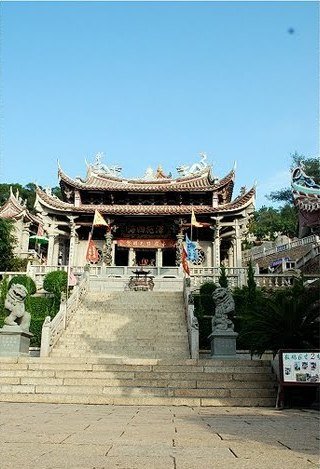
Meizhou Island is a small island off the coast of Putian, connected to the mainland by ferry, and it is one of the most important pilgrimage sites in the Chinese religious world. This is where Mazu was born — Lin Mo, a young woman who drowned in the strait in the 10th century and was subsequently venerated as the goddess of the sea. The cult spread wherever Fujianese and Cantonese sailors travelled, generating more than three thousand temples worldwide, but the Mazu Temple complex on the ridge of Meizhou Island remains the mother temple and the destination for serious pilgrims.
The Mazu Temple Complex has been rebuilt and expanded repeatedly over ten centuries and is now a substantial religious city sprawling across the island's spine. The atmosphere on ordinary days is one of genuine devotion: the smoke from the incense burners is dense, the offerings are serious, and the pilgrims — many of them Taiwanese, who maintain an especially strong Mazu tradition — are there for religious rather than touristic purposes. The annual birthday festival on the 23rd day of the third lunar month draws upward of a hundred thousand worshippers, a remarkable gathering that overwhelms the island's infrastructure but creates a genuinely unforgettable spectacle of popular religion. The Mazu Folklore Museum documents the worldwide spread of the cult with bilingual displays.
Away from the temple, the island is small enough to walk across in an hour. East Beach on the island's seaward side is a clean stretch of sand, and the clifftop paths offer views across the Taiwan Strait. The island is reached by ferry from Putian's Meizhou Pier, a journey of about 30 minutes, with services running throughout the day. An overnight stay is possible and worthwhile for the dawn light on the temple, though accommodation is basic and primarily aimed at pilgrims.