Mount Tai
©
Mount Tai

Mount Tai

Sacred Shandong mountain long climbed by emperors, associated with Taoist cosmology and imperial legitimacy.

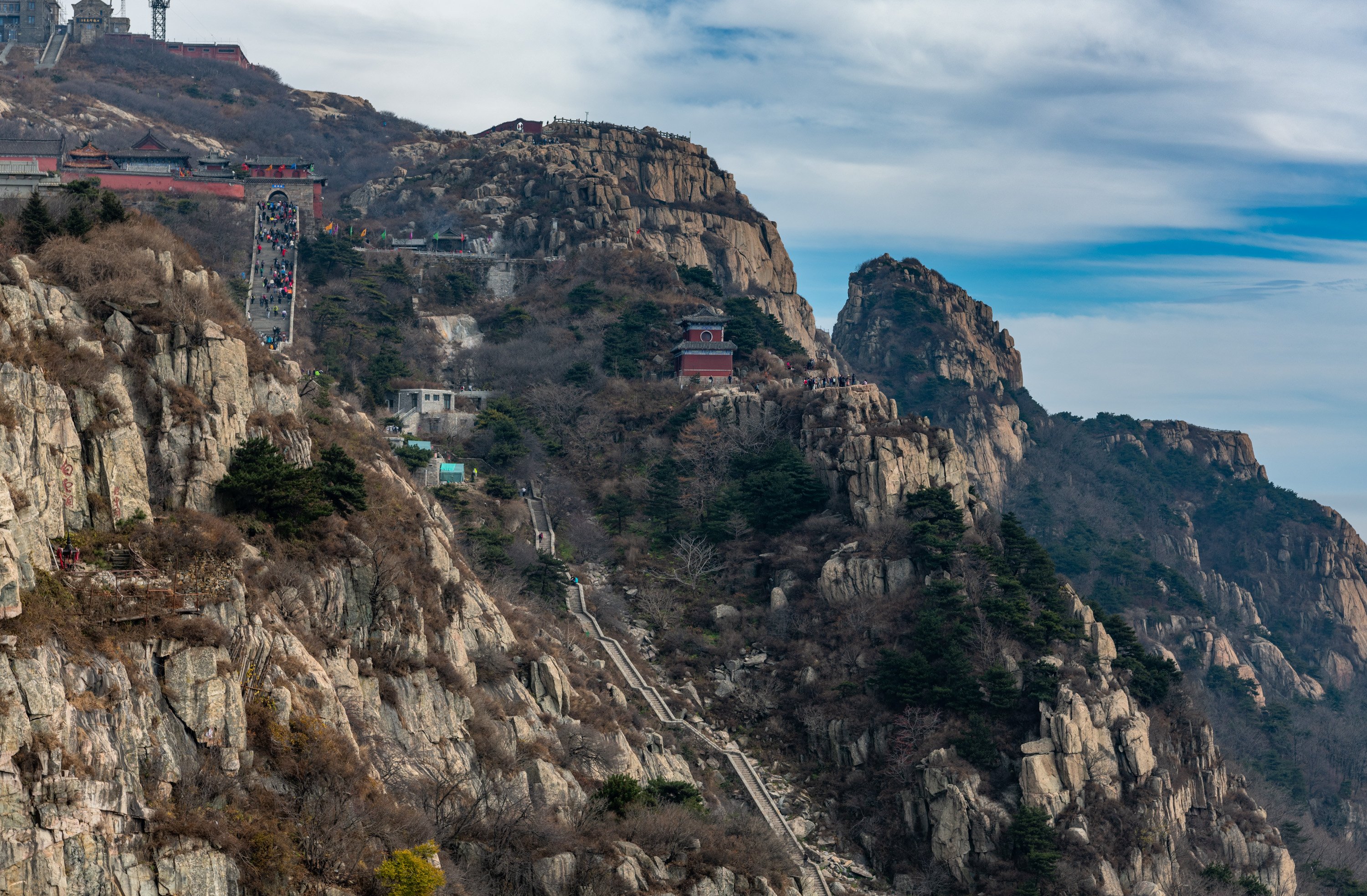
Tai Shan is not the highest mountain in China — not even close — but it is the most climbed, the most venerated, and by many reckonings the most important. The five sacred Taoist mountains each represent a cardinal direction, and Tai Shan holds the east, which in Chinese cosmology means it represents birth, spring, and the power to confer legitimacy on rulers. Seventy-two emperors made the ascent to perform the feng and shan sacrifices at the summit; so did Confucius, who reportedly observed from the peak that the world below seemed small. The mountain is a UNESCO World Heritage Site, and the stone-paved staircase to the top is lined with inscriptions, archways, temples, and carved prayers accumulated over three millennia.

The main trail from the base to the summit runs roughly 7,500 stone steps and takes between four and seven hours depending on pace and fitness. Most Chinese pilgrims do it at night to reach the summit in time for sunrise, which is worth the effort: when the clouds below catch the first light it is easy to understand why generations of poets reached for superlatives. The South Gate of Heaven and summit temples mark the final approach, and the summit has a handful of temples, a weather station, and several overpriced hotels that exist entirely to allow you to be there at dawn. The trail itself is lined with imperial inscriptions and steles — three millennia of carved text that make the mountain one of the world's largest open-air archives.

For those who prefer not to walk, buses run from Tai'an city to the midpoint, and the cable car covers the upper section in both directions. Don't miss the Dai Temple at the mountain base in Tai'an — its Song Dynasty main hall and 62-metre mural are among the greatest surviving pieces of pre-modern Chinese architecture. The western trail offers a quieter alternative for those who want to escape the main tourist flow. Base yourself in Tai'an, a 20-minute bus ride away, and arrive early to beat the worst of the crowds on weekends and holidays.

Guide

Getting There

Mount Tai is most conveniently reached via Tai'an, the city at its base. Tai'an is on the Beijing–Shanghai High-Speed Railway and is just 20 minutes from Jinan by high-speed train. From Beijing South station, Tai'an is about 2 hours on the high-speed line. Shanghai Hongqiao to Tai'an is about 3 hours.

From Tai'an railway station, bus routes serve both the main Red Gate trail entrance (Taishan Scenic Area north entrance) and the Tianzhufeng western route. The bus ride from station to Red Gate takes about 20 minutes. Taxis are also readily available. The admission area is a 10-minute walk from the Red Gate bus stop.

The total admission charge is ¥127 per adult (includes shuttle buses within the scenic area). Cable car tickets are additional (¥100–120 each way) and purchased separately at the cable car station.

Guide

Things to Do

Mount Tai — Tai Shan — is a UNESCO World Heritage Site, the most sacred of China's Five Sacred Mountains, and one of the most climbed mountains on earth. The site divides between the approach trail (7,500 stone steps with temples, inscriptions, and archways), the summit (temples, a weather station, and the famous sunrise view), and the base city of Tai'an, where the Dai Temple is one of the great surviving pieces of imperial architecture in China.

Guide

When to Go

Mount Tai is visitable year-round but the experience varies dramatically by season. Spring (April–May) is the best overall combination: comfortable temperatures for climbing, possible mist and cloud seas below the summit, and wildflowers along the trail. Autumn (September–October) is the second-best option: clear skies, good visibility, and the forest turning color.

Summer (July–August) is peak domestic tourist season and the mountain is extremely crowded, particularly on weekends and Golden Week holidays. The trails are manageable but the cable car queues can be long. Sunrise in summer is early (around 5am) and the overnight climb is warm but mosquito-heavy at the lower elevations.

Winter offers the mountain nearly to yourself, with snow on the upper trail and ice on the Shiba Pan stairs (bring crampons or rent spikes at the cable car station). The summit sunrise in winter — when it happens — is extraordinary: the plains below visible for 100 kilometres in the clear cold air.