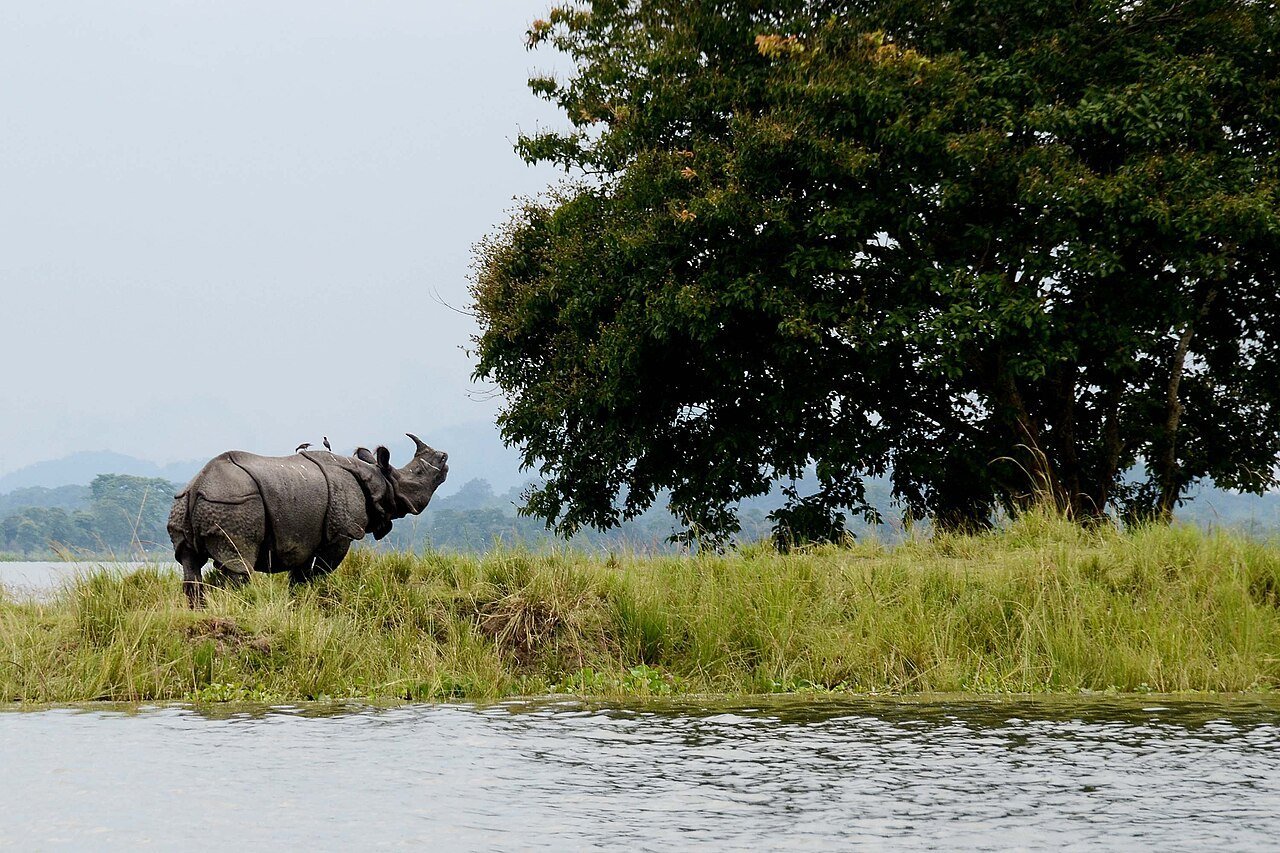
Kaziranga National Park lies on the south bank of the Brahmaputra in Assam, covering 688 square kilometres of tall elephant grass, marshland, and dense tropical forest. First established in 1908 as a reserve forest with barely a dozen rhinos, it was declared a National Park in 1974 and is now a UNESCO World Heritage Site.
Kaziranga is famous above all for the Indian one-horned rhinoceros — it holds around two-thirds of the world's population. Tigers are present in significant numbers too, along with wild buffalo, swamp deer, hog deer, wild boar, hoolock gibbons, and capped langurs. The birdlife is exceptional: crested serpent eagles, Pallas's fishing eagles, the endangered Bengal florican, great adjutant storks, bar-headed geese, and pelicans are all found here.
Mihimukh is the main entry point, where jeep safaris and early morning elephant rides can be arranged through the Tourist Centre. The park is open from November to April — the monsoon floods much of the low-lying grassland during the rest of the year, which is precisely what keeps the habitat so rich.