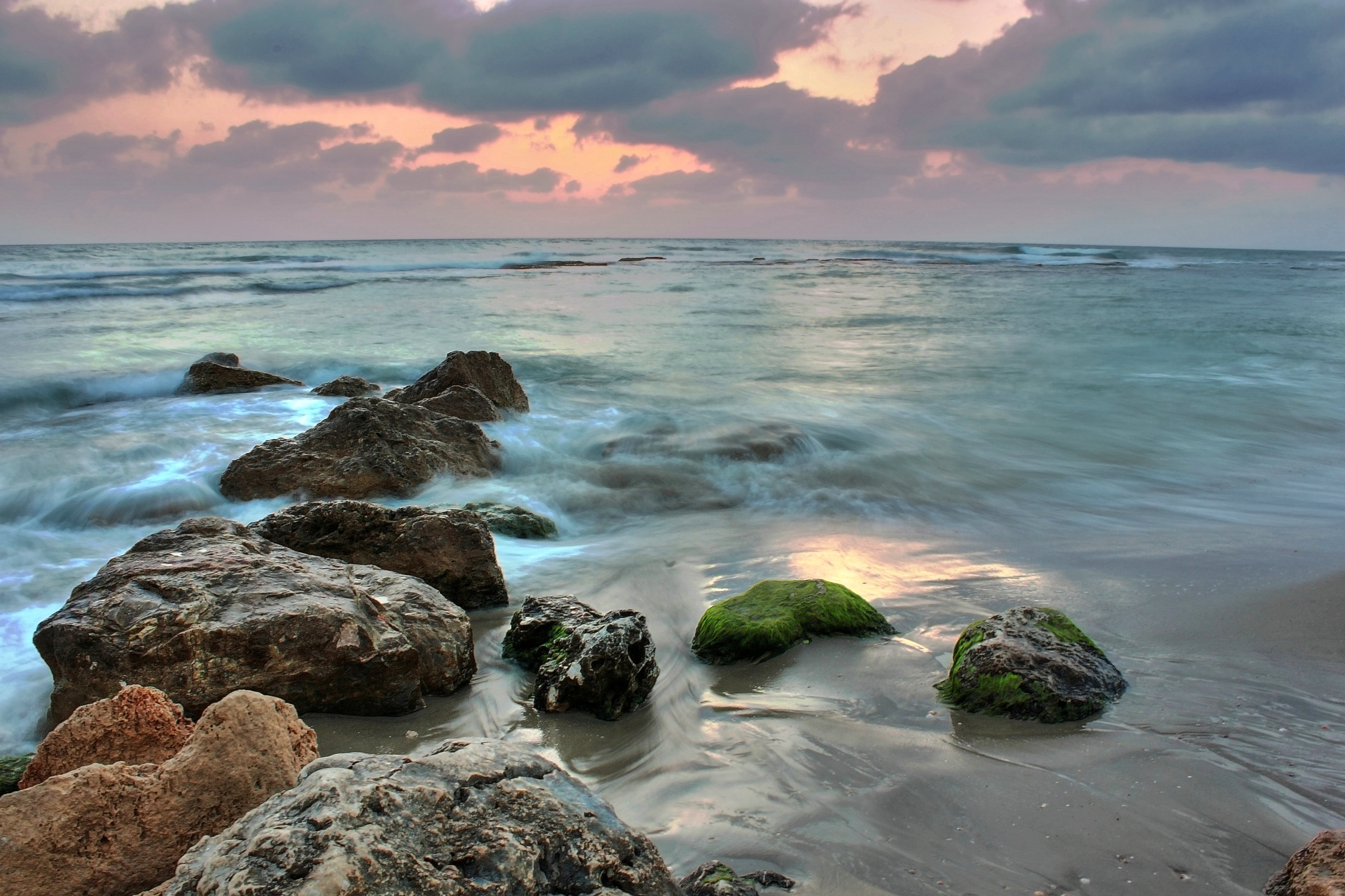
Caesarea is the great Roman-and-Crusader port on the coast about forty kilometres north of Tel Aviv, between Tel Aviv and Haifa. Herod the Great built it from nothing in the first century BC, naming it for the emperor Augustus and engineering a vast artificial harbour out into the open sea — at the time one of the largest in the Mediterranean. The harbour silted up centuries ago, but the ruins it served are still spread along the shore: a Roman theatre, a hippodrome, the foundations of Herod's seaside palace, and a Crusader fortress whose walls and moat were thrown up over the older town a thousand years later.
The whole site is now Caesarea National Park, and you should give it the better part of a day. The Roman theatre, restored, is still used for summer concerts. The most photographed feature sits a short walk north of the main gate: the high arched aqueduct that carried water down from springs near Mount Carmel, marching for kilometres along a sandy beach where people now swim in its shadow. Between the monuments there are cafés and restaurants built into the vaults along the old harbour, so you can break the walking with lunch by the water.
Beside the ruins, modern Caesarea is one of Israel's most affluent planned towns, with the country's only 18-hole golf course and a scatter of low villas among the dunes — but the visit is really about the archaeology and the coast. Wear sun protection; shade is scarce and the seaside light is fierce in summer.
To get there from Tel Aviv, take a direct train to Caesarea-Pardes Hanna station and a local shuttle or taxi the last couple of kilometres, about half an hour of travel in all. For a fuller coastal day you can pair it with Haifa further north, or use Netanya just to the south as a base.