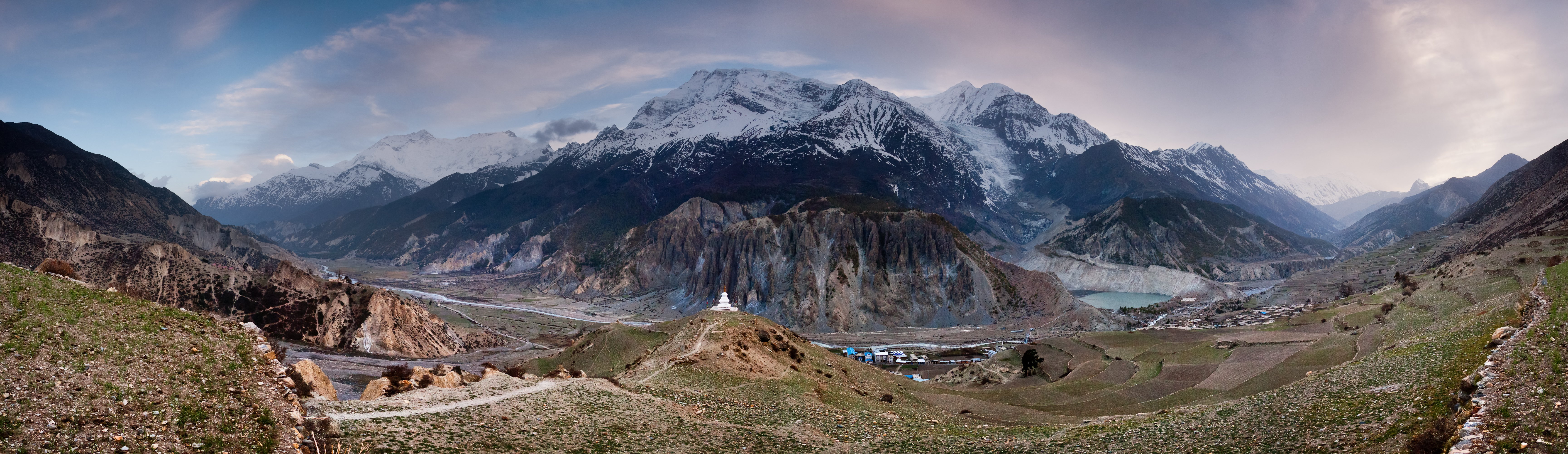
The Annapurna region is Nepal's most visited trekking destination — and for good reason. Centred on the Annapurna massif, which includes Annapurna I (8,091m), the tenth-highest peak on earth and the first 8,000-metre peak ever climbed, the area encompasses a huge sweep of terrain from subtropical river valleys to high-altitude desert plateau. The Annapurna Conservation Area, at 7,629 square kilometres, is the largest protected area in Nepal and one of the most species-rich in the Himalayas.
The classic Annapurna Circuit is a 10–21 day walk that circumnavigates the entire massif, beginning and ending near Pokhara or Besi Sahar. The route crosses the Thorong La Pass at 5,416m — the highest point most trekkers ever reach — and passes through an extraordinary range of landscapes and cultures. The southern slopes are Hindu Gurung and Magar villages surrounded by terraced rice fields; the northern reaches around Manang and Mustang have a Tibetan character, with flat-roofed stone houses, prayer flags, and a rain shadow climate that keeps the skies clear even during monsoon. The shorter Annapurna Sanctuary trek, a six- to ten-day walk into the glacial amphitheatre below Annapurna I, offers some of the most dramatic close-up mountain scenery on earth.
The region's hub is Pokhara, two hours by road from Kathmandu (or a 25-minute flight), where most trekkers begin their permits and gear up. Besisahar is the traditional trailhead for the full circuit. Facilities on the main trails are excellent by trekking standards — a network of teahouses provides food and a bed the whole length of the circuit — but you are still walking through remote mountain terrain where altitude sickness, weather changes, and distance from medical care are real considerations. The trekking permit (TIMS card plus Annapurna Conservation Area Permit) can be arranged in Pokhara or Kathmandu.
The best trekking seasons are October–November (post-monsoon, clear skies, busy trails) and March–May (pre-monsoon, rhododendrons in bloom on the lower slopes). December–February is cold but possible on the lower sections. The monsoon (June–September) is inadvisable on the southern circuit but surprisingly viable on the northern (Manang) side, where the terrain is arid enough to be walkable even in the rainy season.