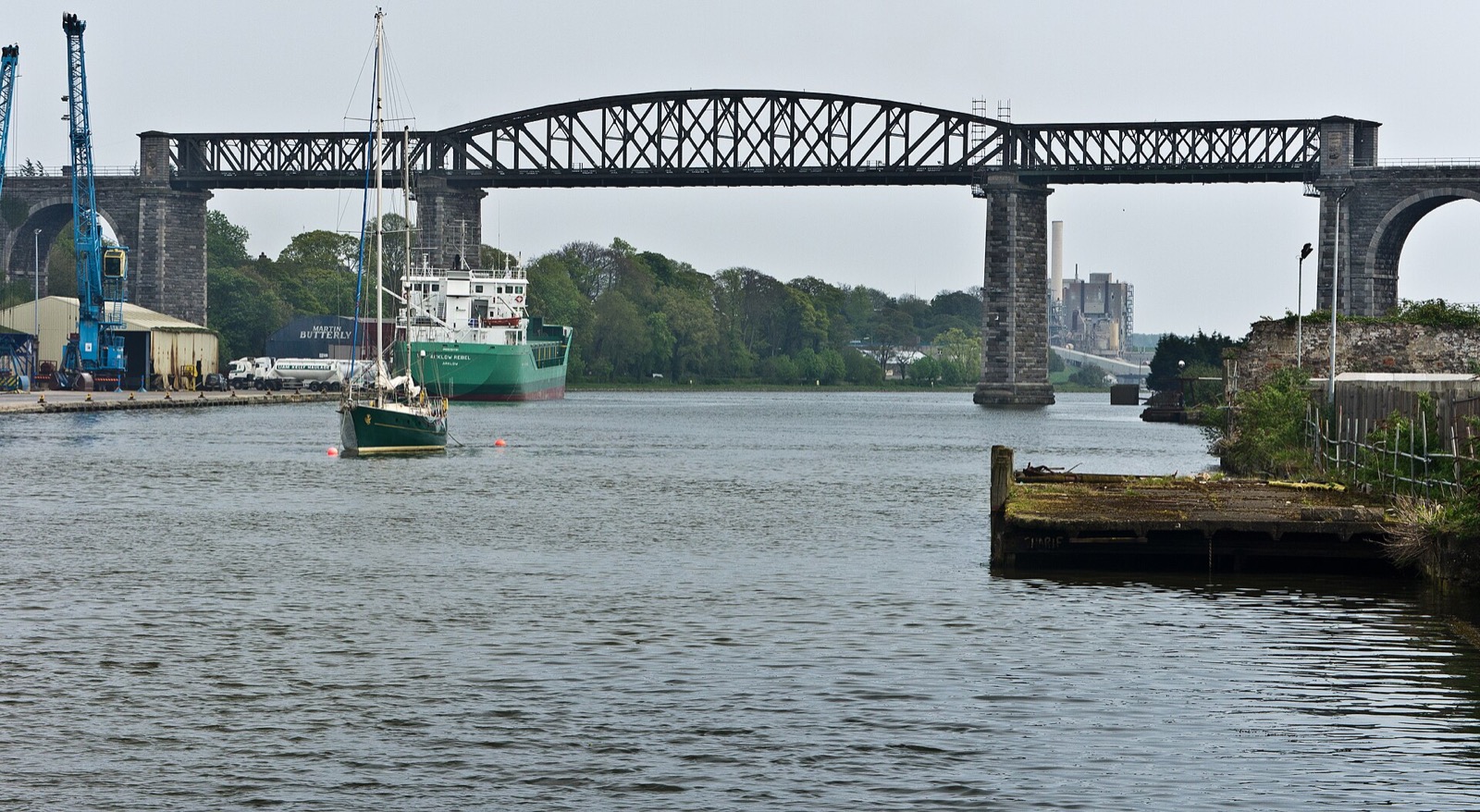
Drogheda is an old port town on the River Boyne, 40 kilometres north of Dublin on the road and railway to Belfast. With about 44,000 people it is the largest town in the Republic, and it is the last place the Boyne can be bridged before it reaches the sea. The name means "bridge at the ford". It is a working town, not a pretty one, but it has more medieval stone than most Irish cities and it sits at the door of some of the most important sites in the country.
The town was founded as two Norman settlements on either bank, united in 1412. Its darkest day came in September 1649, when Oliver Cromwell's army stormed the walls and massacred the Royalist garrison. Millmount, the great mound south of the river, was where the defenders made their last stand; today it holds the town museum and a Martello tower with the best views in Drogheda. North of the river, St Laurence's Gate is one of the finest medieval barbicans in Ireland, and St Peter's Church on West Street displays the preserved head of Saint Oliver Plunkett, executed in London in 1681.
The real reason most travellers come is the country around it. Brú na Bóinne, with the passage tombs of Newgrange and Knowth, is 8 kilometres west, and Bus Éireann route 163 runs there from town. On the way you pass Oldbridge, where William III beat James II at the Battle of the Boyne in 1690. North of town are the ruins of Old Mellifont Abbey, the first Cistercian monastery in Ireland, and the high crosses of Monasterboice.
Drogheda is an easy base without a car: trains run to Dublin, Dundalk and Belfast. Long sandy beaches stretch along the coast on both sides of the Boyne estuary, and the Drogheda Arts Festival fills the town over the May bank holiday weekend.