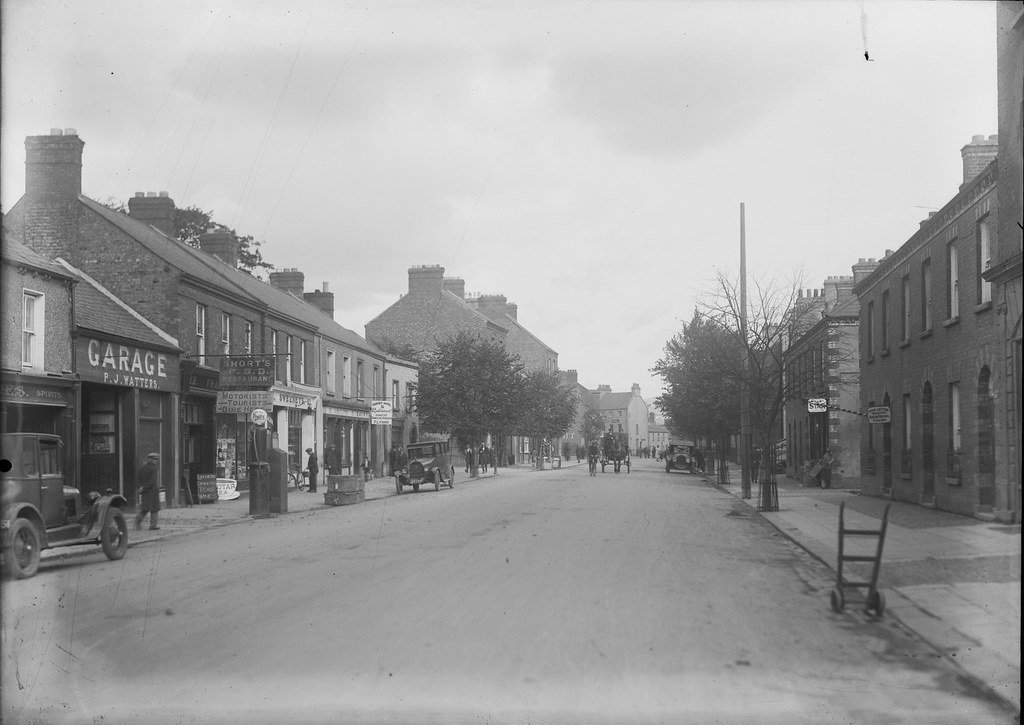
Dundalk sits roughly halfway between Dublin and Belfast, making it a natural stopping point on the Dublin–Belfast corridor. The town has a handsome 19th-century cathedral, St Patrick's Cathedral — its Gothic spires modelled on King's College Chapel, Cambridge, and completed during the darkest year of the Great Famine — and a compact centre with good pubs and a County Museum in a former distillery building.
The real draw is the surrounding landscape. The Cooley Peninsula to the northeast has excellent hill walking — the Táin Way loops through mountains that inspired the great Irish cattle-raid epic, the Táin Bó Cúailnge. The coast road out to Carlingford is one of the prettiest short drives in the northeast, ending at a perfectly preserved medieval village with Norman castle ruins and a reputation for oysters. Proleek Dolmen, 4 km from the town, is one of the finest Neolithic portal tombs in Ireland, its 47-tonne capstone balanced on three upright stones in an open field. And Dún Dealgan Motte, traditionally the birthplace of the mythological hero Cú Chulainn, rises from a drumlin hill west of town with fine views over the bay.