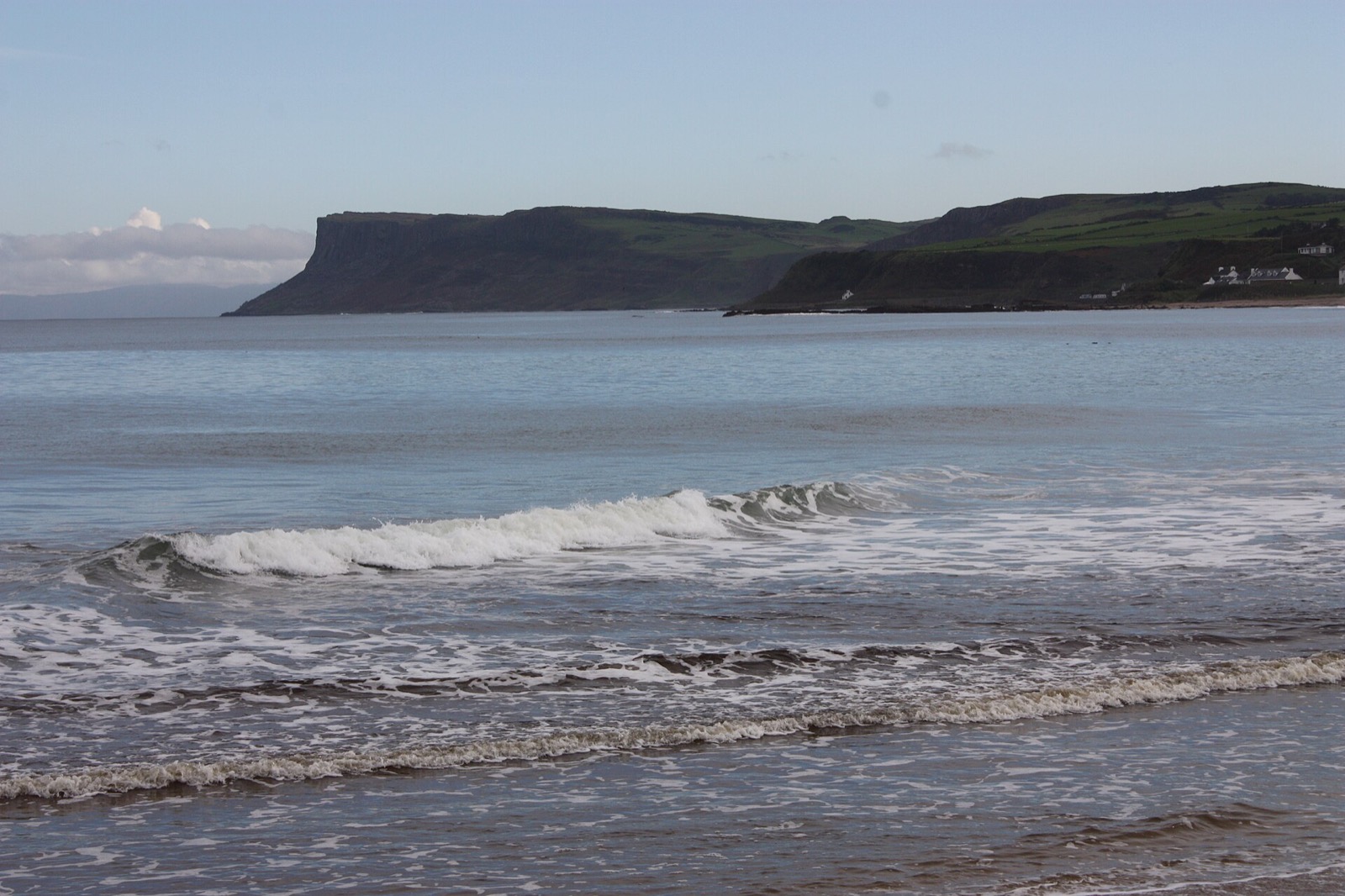
Ballycastle is a small seaside town of about 5,600 people at the north-east corner of County Antrim, where the Causeway Coast meets the Glens of Antrim. It has a sweeping beach on its eastern side, the heather dome of Knocklayde behind it, and across the bay the great cliff of Fair Head. On a clear day you can see Rathlin Island and the Mull of Kintyre in Scotland.
The town grew out of a cluster of MacDonnell strongholds and was rebuilt in the 18th century by Hugh Boyd, who built the harbour and set up coal mines, potteries and a glassworks. His legacy is the Diamond, the town's handsome square, and Holy Trinity Church of 1756 at its centre. On the road in from the east stand the ruins of Bonamargy Friary, where the chieftain Sorley Boy MacDonnell is buried. Down at the harbour, a monument recalls that Marconi's men made the world's first commercial wireless link here, between Ballycastle and Rathlin, in 1898.
The best time to come, or the worst if you dislike crowds, is the last Monday and Tuesday of August, when the Ould Lammas Fair takes over the streets. It has run for some 400 years and is widely considered the oldest fair in Ireland. Historically a lamb sale, it is now a street fair with stalls, buskers and up to 60,000 visitors, and the traditional things to eat are yellowman, a sticky honeycomb toffee, and dulse, a dried seaweed.
Ballycastle sits about halfway along the Causeway Coastal Route, so it is a good base for both directions: west to Carrick-a-Rede, the Giant's Causeway and the Dark Hedges, east to Murlough Bay and the Glens. The ferry to Rathlin leaves from the harbour, and a seasonal passenger service runs to Campbeltown and Port Ellen in Scotland.