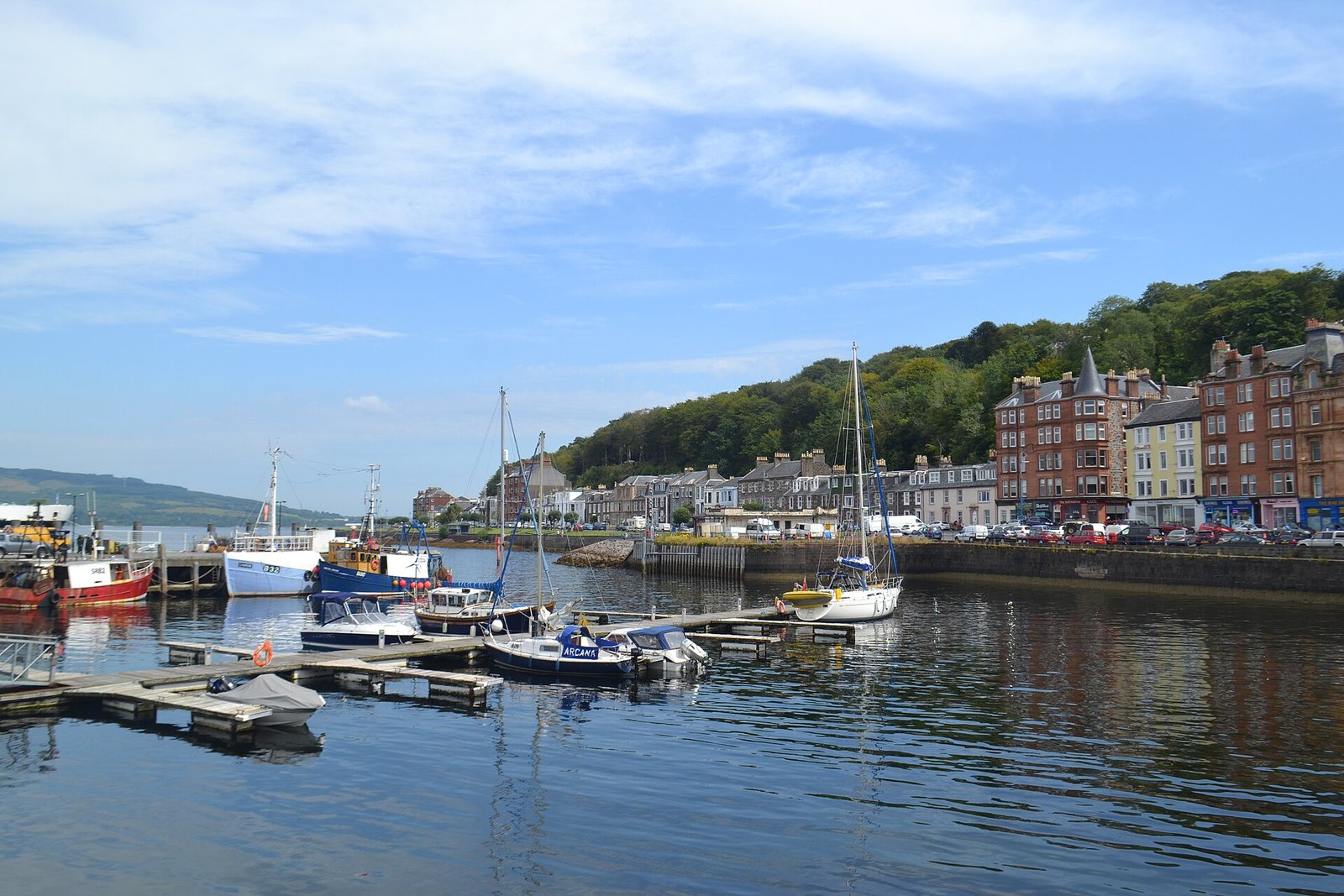
Rothesay is the main town of the Isle of Bute, curled around a wide bay on the Firth of Clyde. In its Victorian and Edwardian heyday this was where Glasgow went "doon the watter": steamers crowded the pier, a hydropathic hotel took the cure-seekers, an electric tramway ran across the island to the beach at Ettrick Bay, and the Winter Gardens and the 1938 Pavilion filled with music-hall stars. Cheap package holidays ended all that in the 1960s, and Rothesay has been quietly reinventing itself ever since.
What's left is a handsome, slightly faded seaside town of tall sandstone tenements and villas along the bay, with a surprising amount of history at its centre. The ruined Rothesay Castle, circular and moated, was taken by Norse raiders in the 13th century and later became a favourite residence of the Stewart kings; it's why the heir to the throne is still the Duke of Rothesay. By the ferry terminal, the Victorian Toilets are a genuine attraction, and the modernist Pavilion on Argyle Street has been undergoing a long restoration.
Bute itself is small and gentle, split by the Highland Boundary Fault into hillier country in the north and farmland in the south. Its great sight is Mount Stuart, the extravagant Gothic Revival seat of the Marquesses of Bute, a few miles south of town. Further south still, the ruined St Blane's Church sits in a hollow on the site of an early monastery, and the west coast has sandy bays looking across to the mountains of Arran. The 30-mile West Island Way crosses the island for walkers.
Getting here is easy: a CalMac ferry crosses from Wemyss Bay, where trains connect to Glasgow Central, and a second, very short crossing links Rhubodach in the north of Bute with Colintraive on the Cowal peninsula. It makes Rothesay one of the simplest island escapes from Glasgow.