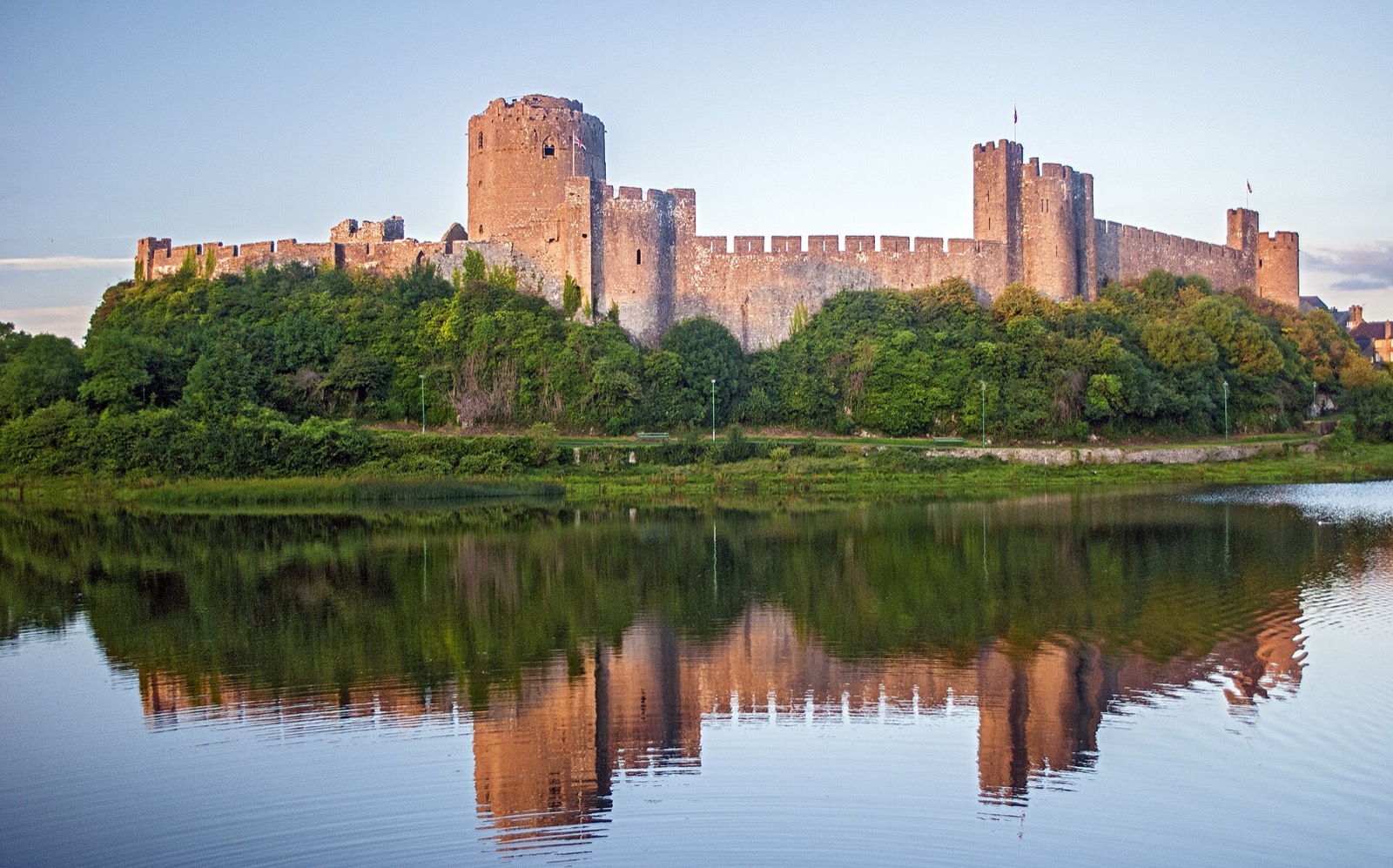
Pembroke (Penfro) is a market town of about 7,500 people built along a single limestone ridge, with water on three sides and Pembroke Castle at its western tip. It sits just outside the boundary of the national park, but it is the gateway to the south Pembrokeshire coast: Bosherston, Stackpole and Manorbier are all within a few miles.
The castle is the reason to come. The Normans founded it in 1093; William Marshal rebuilt it in stone a century later, and in 1457 Henry Tudor, the future Henry VII, was born here. It is huge and well restored, and the view of it across the millpond, especially in evening light, is one of the classic images of Wales.
The town itself is essentially Main Street, the only street inside the medieval town walls, lined with Georgian and older houses on medieval plots. It is not a showpiece like Tenby, but a walk along Main Street, the millpond and the walls takes an hour and is worth it. Across the river, Monkton Priory is as old as the castle, and two miles east are the ruins of the bishops' palace at Lamphey.
Pembroke has a railway station on the line from Whitland and Tenby. Pembroke Dock, the ferry port for Rosslare in Ireland, is a separate town three miles north-west.