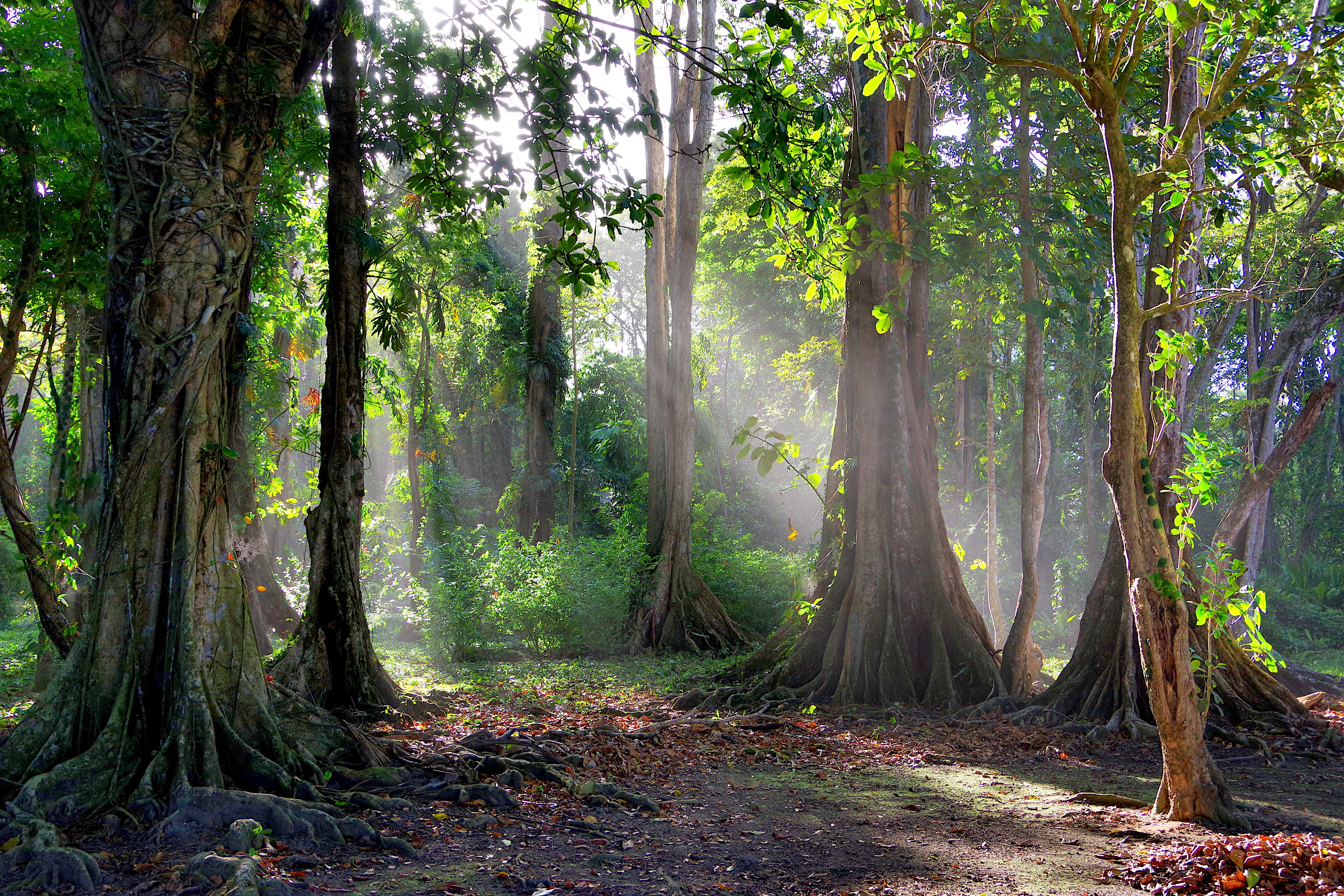
The Canton of Talamanca, in Costa Rica's Limón province, is the country's southern Caribbean zone — and one of its most remarkable corners. It holds roughly 3% of the world's biodiversity, packed into a landscape that runs from coral reefs and turtle-nesting beaches to cloud-drenched rainforest and the high peaks of the Talamanca mountain range.
Culturally it is unlike anywhere else in Costa Rica. Three indigenous groups — the Bribri, the Cabécar, and the Teribe — have lived here for centuries and maintain distinct traditions, languages, and territorial reserves. Alongside them are Afro-Caribbean communities whose roots go back to 19th-century Jamaican immigrants, and Spanish-speaking campesinos from the interior. The result is a layered, cosmopolitan culture that finds expression in food, music, and a palpable sense of local identity.
The coast is the main draw for most visitors. Cahuita has a reef-fringed national park and a famously relaxed village atmosphere. Puerto Viejo de Talamanca is the region's social hub — surfing, nightlife, and a good restaurant scene — while Punta Uva and Manzanillo to the south are quieter and wilder. The Gandoca-Manzanillo Wildlife Refuge protects the southern stretch of coast, where leatherback turtles nest between March and July.
Inland, the forest is extraordinary. The Talamanca mountain range hosts one of the largest intact blocks of montane forest in Central America. River trips into indigenous territory — particularly to the Bribri community of Yorkin — offer something genuinely different: a glimpse of a way of life that has adapted to the rainforest rather than cleared it. In autumn, the skies above Kékoldi fill with raptors: around three million birds funnel through during migration, making it the second most important raptor migration site in the world.