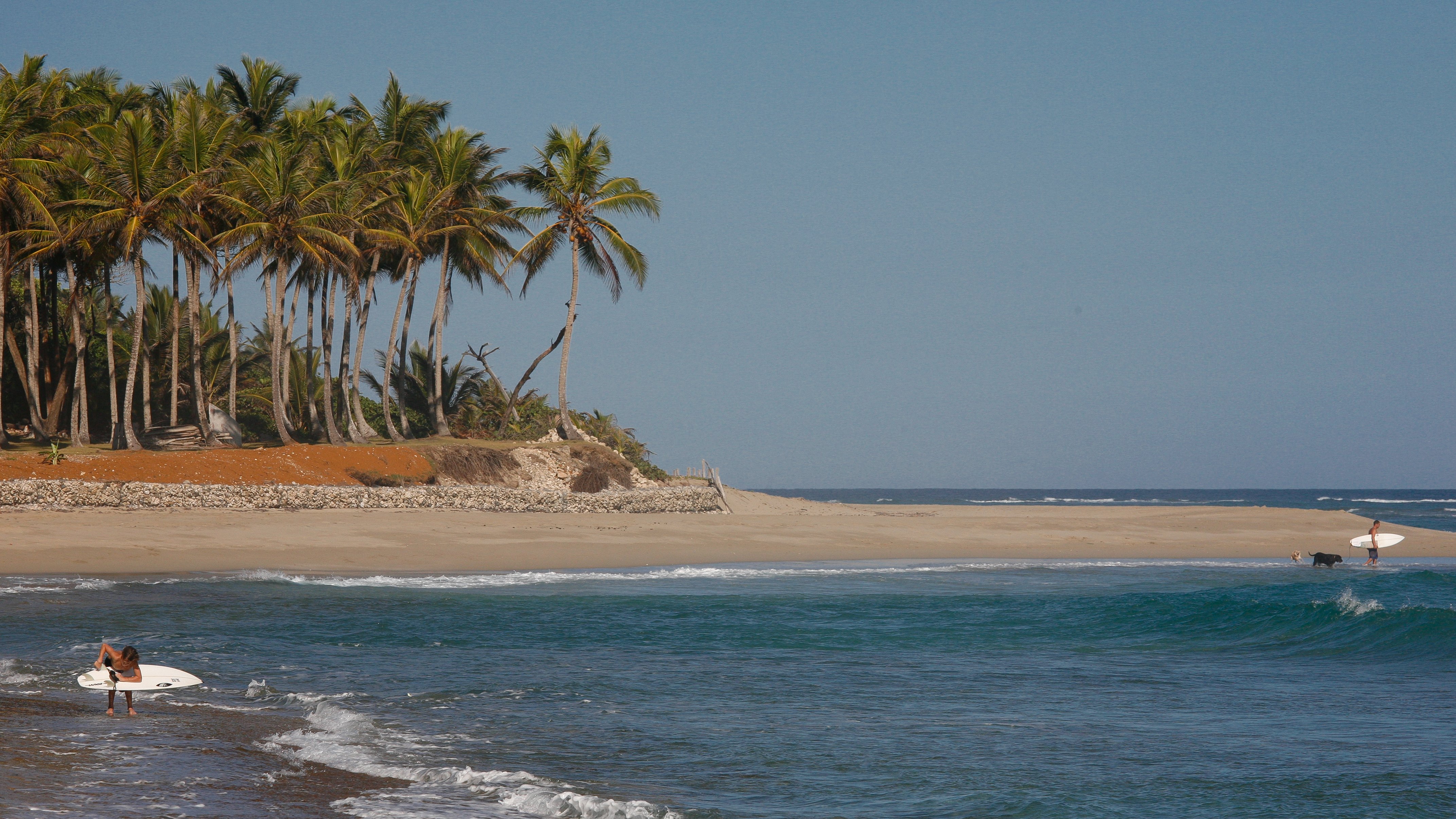
Cabarete is a single road along a bay on the north coast, and it is there because of the wind. The trade winds funnel along this shore and build through the day with the thermals, which produces a pattern the town lives by: surfers take the morning swell, windsurfers get the early afternoon, and by two or three o'clock the bay belongs to the kiteboarders. Most of the schools teach in Cabarete Bay itself, the stretch in front of town also known as Bozo Beach. A reef well out from the shore shelters the bay, so beginners learn in calm water near the beach while experienced riders head out to the reef. Kite Beach, a kilometre west, is the other famous spot, but its sand almost disappears in summer, which makes launching and landing hard there, especially for beginners.
The season runs roughly December to August for wind, with the strongest and most reliable conditions from January through April and again in the summer months. Waves for surfing are best from December to March at Playa Encuentro, four kilometres west, which is also where every surf school in town teaches.
The town itself is a narrow strip of restaurants and bars with their tables on the sand, and it empties and fills with the seasons. It is a young, international place — instructors from everywhere, people who came for a fortnight and stayed a season — and it has little to do with the all-inclusive coast an hour east.
Beyond the water, the 27 Charcos de Damajagua waterfalls are the standard day out: a guided scramble up a river canyon then jumping and sliding back down through twenty-seven pools.