Lake Izabal is Guatemala's largest lake, a broad expanse of freshwater hemmed in by the Sierra de las Minas to the south and the Santa Cruz range to the north. The lake empties east through the Río Dulce gorge, one of the most dramatic stretches of waterway in Central America, before reaching the Caribbean at Livingston.
The lake and surrounding wetlands are rich in wildlife. West Indian manatees inhabit the lake — one of the few viable freshwater manatee populations remaining in the world. They concentrate in the Biotopo Chocón Machacas reserve on the Golfete Dulce. Tarpon, snook, and snapper make it a destination for sport fishermen, and the surrounding forest and mangroves are excellent for birding.
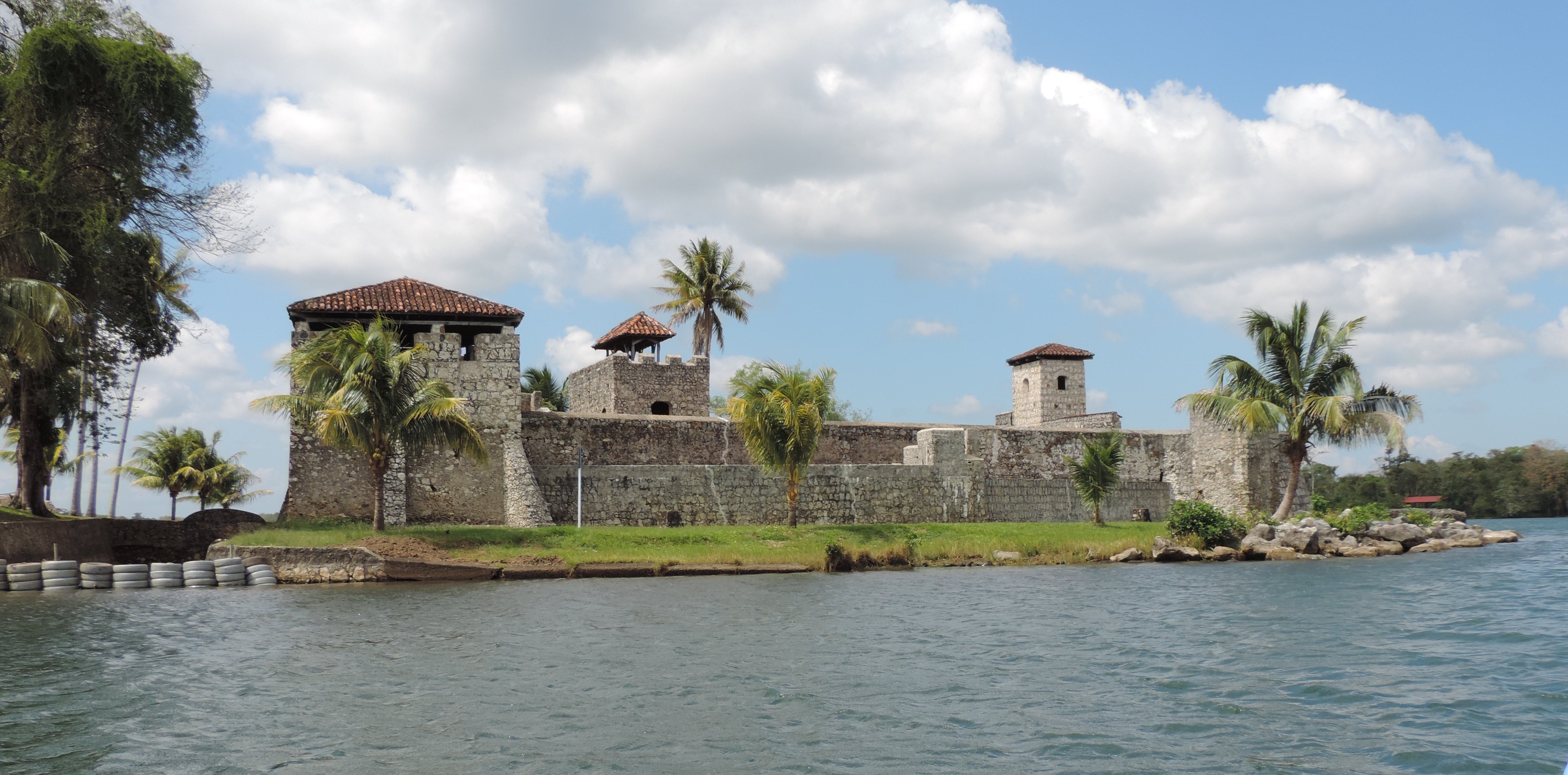
The main base is Río Dulce town, at the eastern end of the lake, accessible by road from Guatemala City or by boat from Livingston. The Castillo de San Felipe, a 17th-century Spanish fort at the narrow passage between the lake and the river, is worth a stop. Several sailing yachts are anchored in the river here year-round — Río Dulce is a well-known hurricane hole — and it is possible to arrange water transport north or south.
The gorge section is the highlight of any visit: limestone cliffs draped in jungle rise over the water, with birds overhead and small waterfalls emerging from the rock. Regular lanchas make the two-hour journey between Río Dulce town and Livingston. On the south shore, hot springs emerge into the lake, and Denny's Beach offers horseback tours into the Sierra de las Minas foothills.