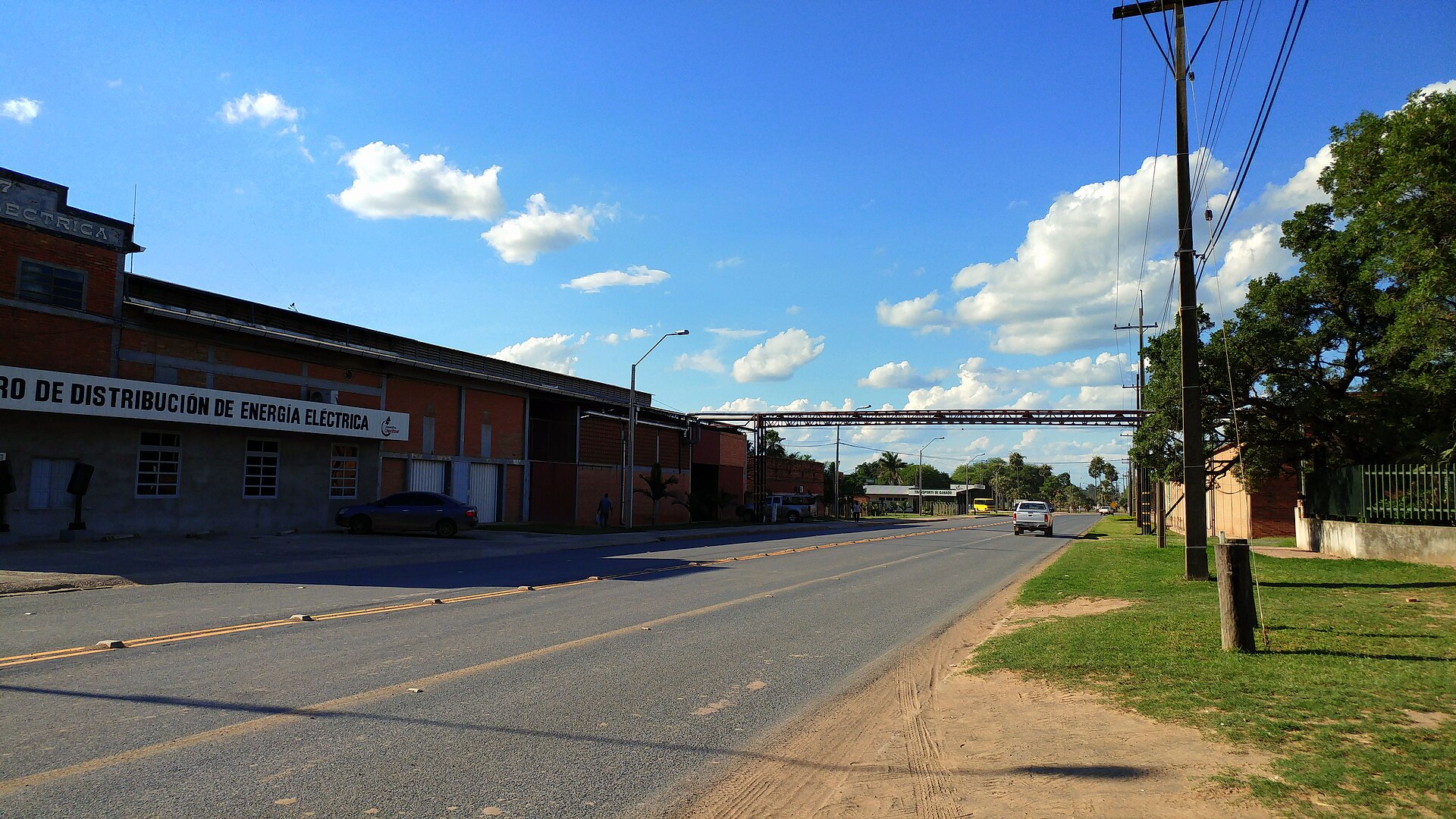
Loma Plata is the oldest of the three Chaco Mennonite colonies — Menno, founded 25 June 1927 by families who had come from Manitoba via Mexico, two years before Fernheim arrived at what became Filadelfia. It is 22 km off the Trans-Chaco on a paved spur, and it is tidier, greener and less institutional than Filadelfia.
The Museo Histórico de la Colonia Menno is the reason to stop: free, well laid out, and unflinching about what the first years cost. The settlers arrived in a drought, buried a large number of their children, and were kept alive partly by Enlhet and Nivaclé neighbours whose land they were settling on — the museum says so. The Chortitzer co-operative that grew out of that is now one of the largest dairy businesses in Paraguay, and you can tour the plant.
East of town the road runs out to a chain of salt lagoons — Laguna Capitán, Campo María, Laguna Flamenco — shallow saline pans in the Chaco scrub that hold large numbers of waterbirds, flamingos among them when the water level suits. This is the most reliable, least strenuous wildlife-watching in the Paraguayan Chaco, and it is an afternoon's drive rather than an expedition. There are basic lodges at Capitán and Campo María.
Go between May and September. From November to March the heat in the Chaco routinely passes 40°C and the lagoon tracks are either dust or mud. Buses from Asunción take about eight hours; most people who come are driving.