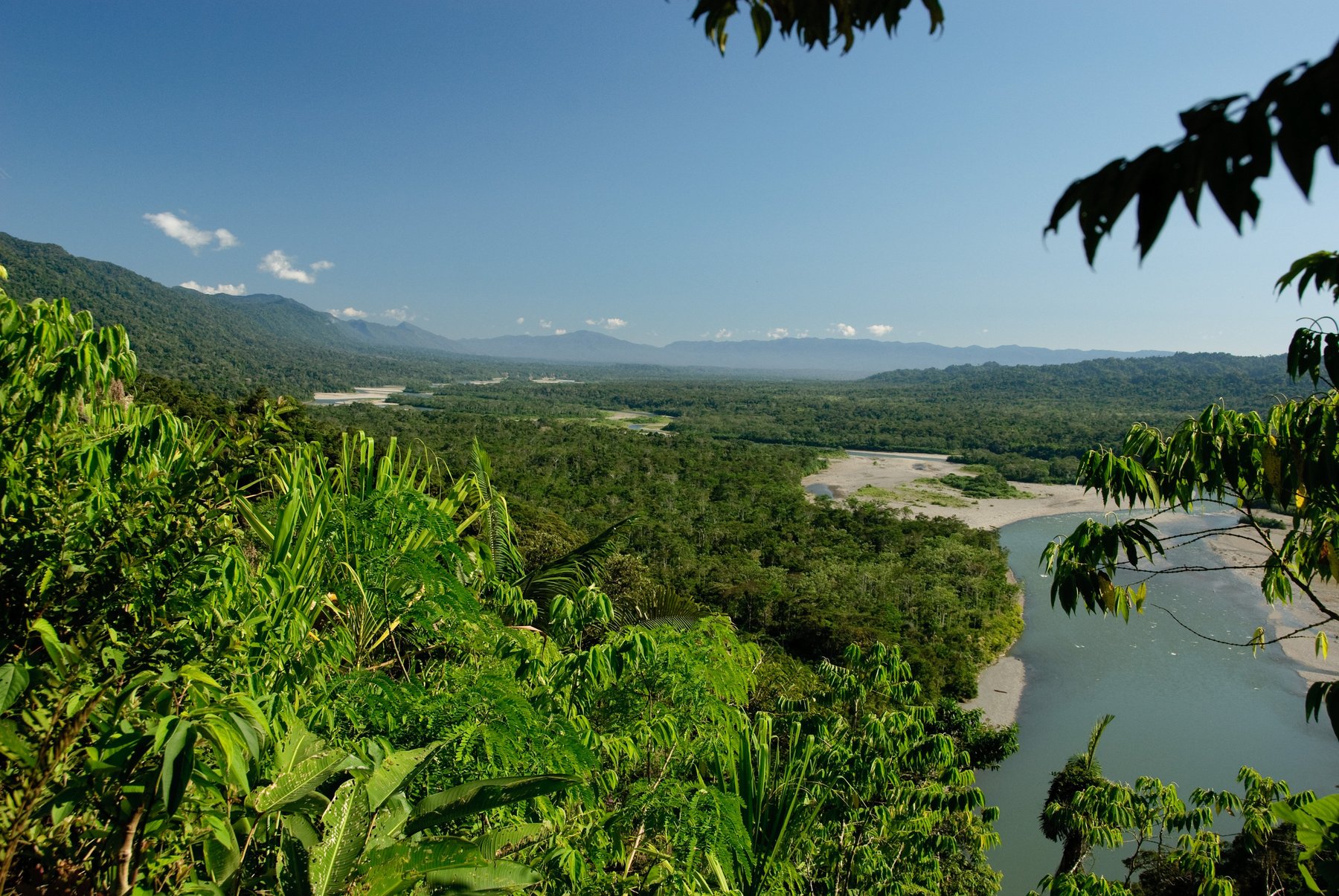
Manu National Park is one of the most biodiverse places on earth — a vast protected area in the Amazon basin of southeastern Peru that covers over 1.7 million hectares across the full altitudinal range from Andean cloud forest to lowland rainforest. The UNESCO World Heritage site contains more species of birds than all of Europe combined, and its mammal, reptile, and plant diversity is similarly staggering. Jaguars, giant otters, tapirs, harpy eagles, and hundreds of parrot species live here. The oxbow lakes along the Manu River, where black caimans bask in the shallows and macaws flock to clay licks in the thousands, are among the most extraordinary wildlife spectacles in South America.
Access is tightly controlled to protect the ecosystem. The main gateway is Cuzco, from where the route descends through all ecological levels — crossing the Andes at the Tres Cruces pass (where you can watch dawn over the Amazon basin), through cloud forest, and down to the lowland jungle. The road journey to Atalaya or Shintuya takes eight to eleven hours, followed by motorized launch travel on the Manu River to reach the park proper. Chartered flights from Cuzco to Boca Manu cut the time significantly for those with budget. All visits must go through licensed operators, as independent access to the reserved zone is not permitted.
Inside the park, tourist lodges provide comfortable bases for wildlife watching. The Manu Wildlife Center is considered one of the best lodges in the Amazon; its proximity to macaw clay licks and oxbow lakes with resident giant otter families makes it particularly rewarding. A visit of at least four nights is the minimum to justify the journey; longer stays substantially increase wildlife encounter chances. Go prepared for heat, humidity, insects, and the possibility of rain at any time of year — and also for some of the most remarkable days of your life.