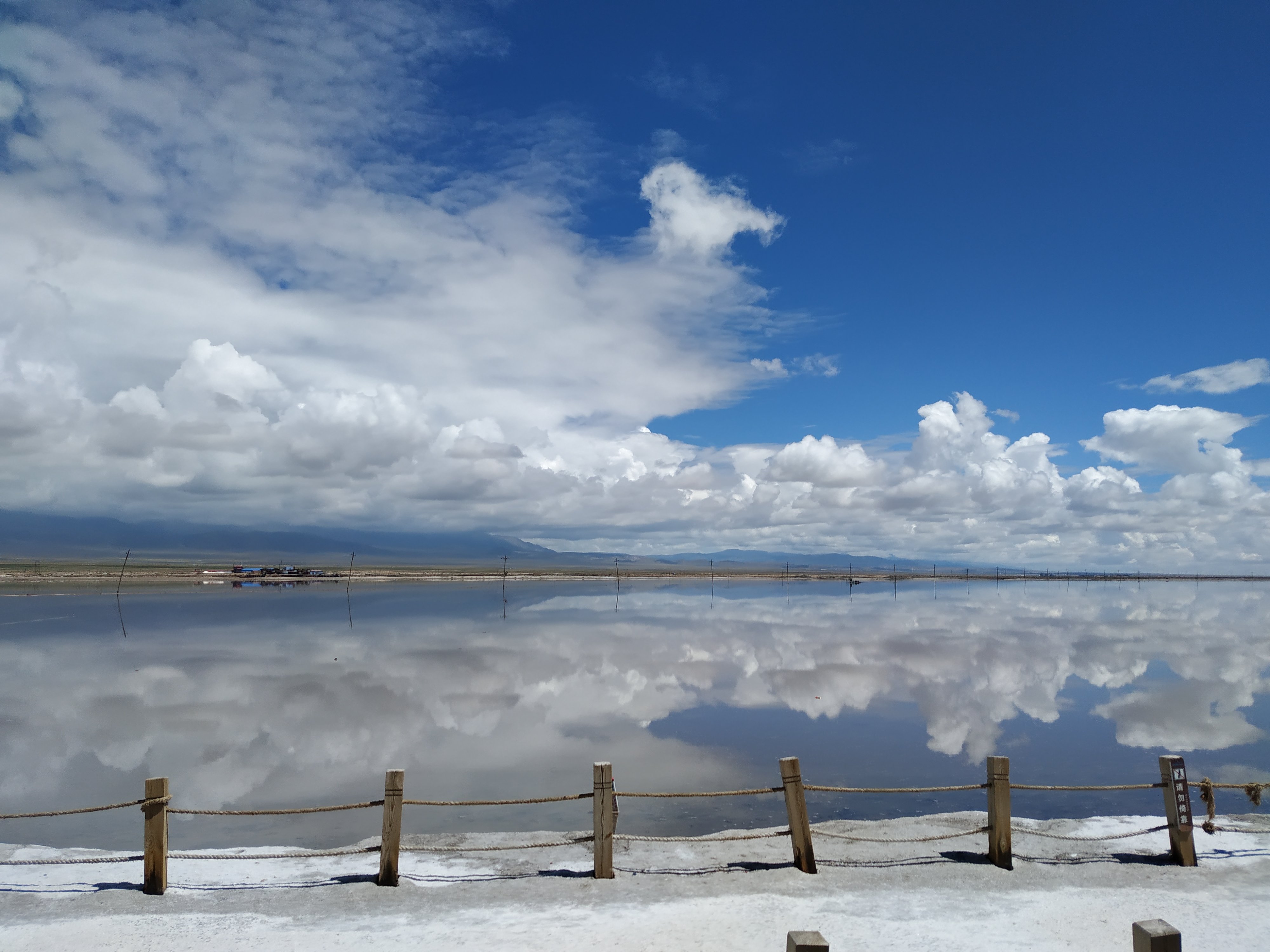
Chaka Lake (Chaka Yanchang) is a salt lake about 300 kilometres west of Xining at an elevation of 3,059 metres, known in China as the "sky mirror" for the reflective surface its shallow, brine-saturated water creates in calm weather. On still mornings, the lake's salt crust and thin film of water produce a near-perfect reflection of the sky and surrounding mountains — an effect that has made it one of the most photographed landscapes in Qinghai and brought Chinese domestic tourists in large numbers.
The Chaka Salt Flat is walkable — the crust is thick enough to bear weight — and rental trolleys run along narrow-gauge tracks across the flats, a slightly surreal experience over water so shallow that it barely submerges the rails. The salt itself has been harvested here for over three thousand years at the Chaka Salt Mine; the lake contains an estimated 600 million tonnes of sodium chloride, and salt-mining operations are visible from the shore. The surrounding hills are bare and sandy, the air is thin and bright, and the scale of the lake — about 105 square kilometres — gives the reflections a vertiginous quality. The Chaka Wetlands at the northern edge attract geese and cranes during migration.
The practical reality is that Chaka has become a popular destination and can be crowded in peak summer months. Early morning visits avoid the worst of the crowds and offer the best reflective conditions, before wind disturbs the surface. The entrance fee is around 50 yuan; it is often combined with a visit to Qinghai Lake, about two hours east.
Buses from Xining's west bus station take about four hours to reach Chaka. There are small guesthouses in the village near the lake entrance for those making an overnight stop on a longer westward journey toward Golmud.