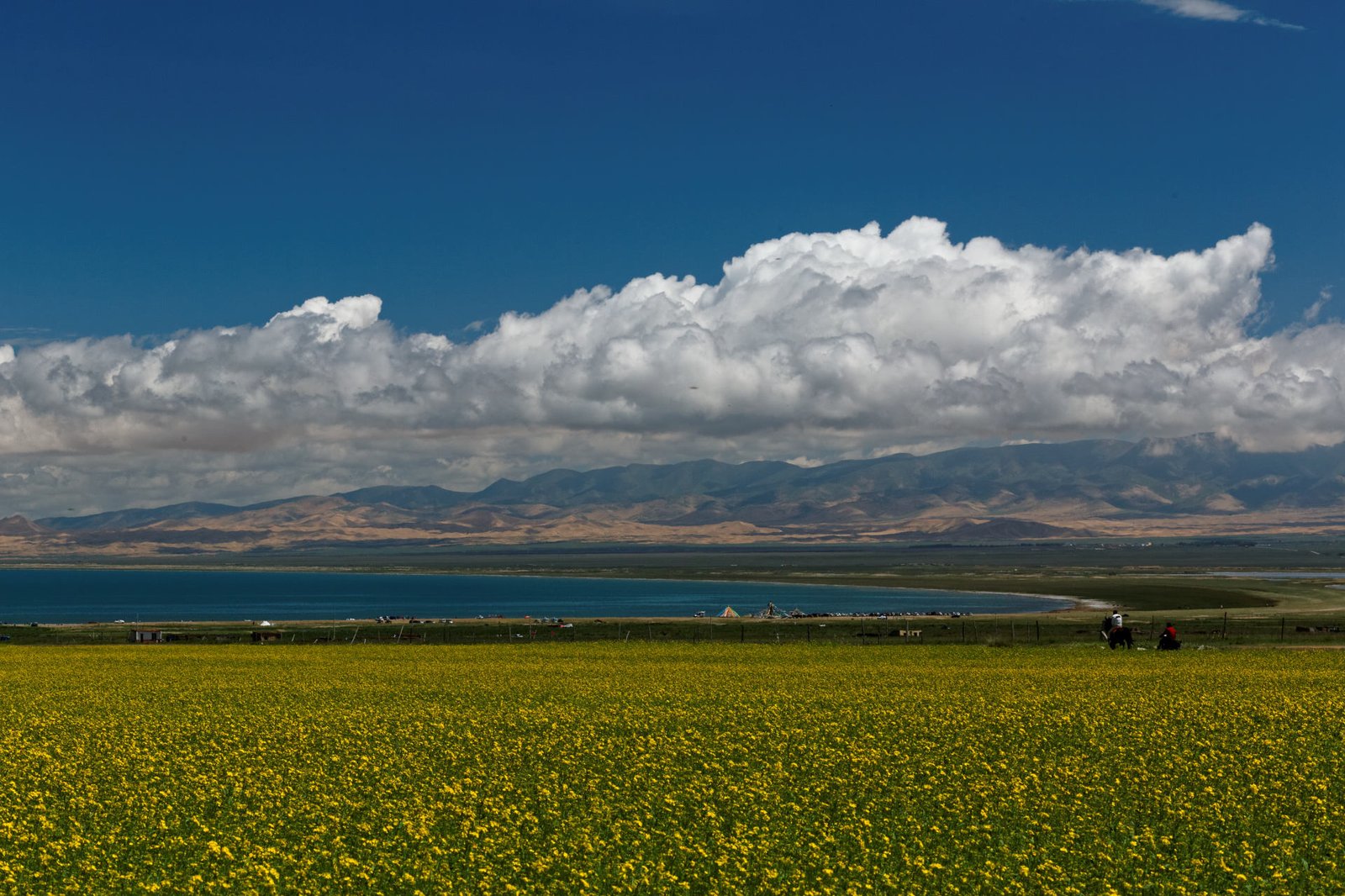
Qinghai Lake — Qinghai Hu in Mandarin, Tso Ngonpo in Tibetan, Koko Nor in Mongolian — is the largest lake in China, a saltwater body of 5,694 square kilometres sitting at 3,205 metres in a broad basin encircled by mountains. At this altitude the light is fierce and clear, the water an improbable shade of turquoise blue, and the surrounding hills treeless and rolling. It is one of the genuinely beautiful landscapes of Asia.
The 360-kilometre lake circuit cycling is one of the classic cycling trips in China. Most cyclists take three to four days; bicycles can be rented in Xining or at the lakeside. The annual Qinghai Lake International Road Cycling Race, held in late July, follows the same route and draws professional teams from across the world. In the weeks around the race the road is lined with spectators and the atmosphere around the lake is festive. Bird Island, on the western shore, hosts over 100,000 migratory birds from May to October — bar-headed geese, brown-headed gulls, cormorants, and wild ducks. The bar-headed goose is the standout: this bird breeds here before flying over the Himalayas to winter in India, crossing the world's highest mountains in a single flight.
The southern shore near Heimahe and the northern shore near Gangcha both have accommodation and camping options. A ferry service runs between the two shores. Designated scenic areas charge around 100 yuan entrance; much of the lakeshore is accessible for a nominal fee at family-run spots. The lake water is too saline for swimming but kayaking and boating are possible.
Getting here independently from Xining requires hiring a car (around 400 yuan) or joining a tour; public buses run to lakeside towns but require some navigation. The drive from Xining takes about two hours, passing Sun and Moon Mountain — the traditional threshold between the Chinese agricultural world and the Tibetan plateau. The Er Lang Jian scenic area on the southern shore is the main visitor entry point, while Haixin Shan in the middle of the lake can be reached by boat. Chaka Lake, about two hours further west, is often added to itineraries for its reflective salt-flat surface.