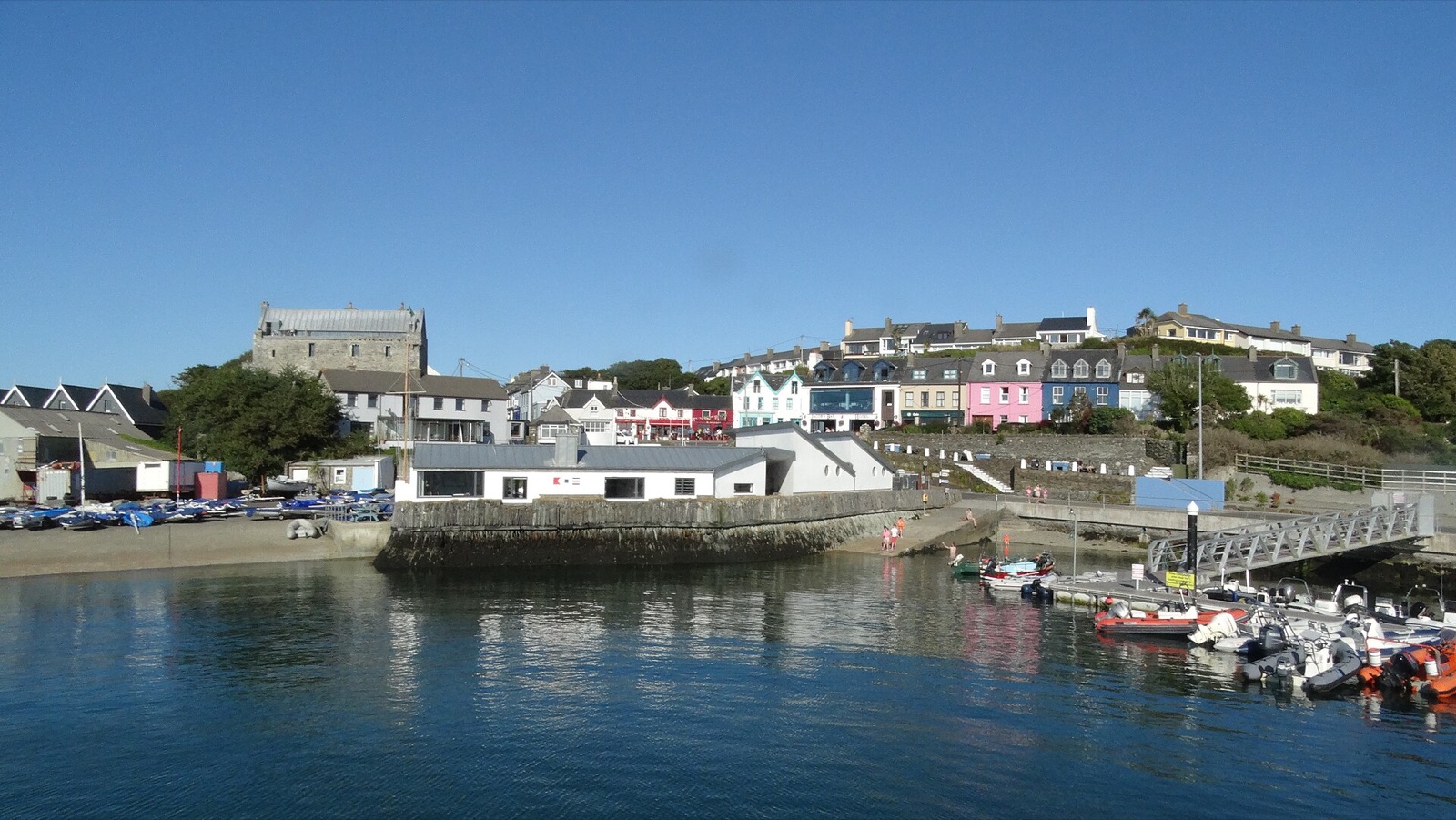
Baltimore is a small harbour village near the south-western tip of Ireland, 13 kilometres from Skibbereen in West Cork. It looks out over a big natural harbour sheltered by islands, and beyond them Roaringwater Bay and the scatter of rocks and islets known as Carbery's Hundred Isles. The harbour is the centre of everything: fishing boats, yachts, dive boats, and the ferries that are the lifeline for the islands offshore. Above it all stands Dún na Séad, the castle of the O'Driscolls who ruled this coast.
Its history is wilder than its pretty harbourfront suggests. In the early 1600s, after English settlers arrived, Baltimore thrived on pilchard fishing and piracy, and pretty much the whole town was in on the trade, local officials included. Then in 1631 it was raided by Barbary pirates from North Africa. Between 100 and 237 people were carried off to be sold as slaves, and only two or three ever saw Ireland again. The survivors fled to Skibbereen, and the village stayed almost deserted for generations. A pub in the village is still called The Algiers.
Today about 400 people live here, many more in summer, and Baltimore is all about the water. It's one of Ireland's best places for sailing, sea angling and diving, with wrecks in the bay that include a Second World War U-boat. Whale-watching trips go out in season, and summer brings the Baltimore Fiddle Fair in May, a wooden boat festival, an O'Driscoll clan gathering and the regatta in early August. For a village this size, the food is remarkable: the restaurant Dede holds two Michelin stars.
The best day out is a ferry ride. Boats run year-round to Sherkin Island, ten minutes away, and to Cape Clear Island, the southernmost inhabited part of Ireland, and in summer there are trips out to the Fastnet lighthouse. Walk out to the white Baltimore Beacon at the harbour mouth, and drive 5 kilometres east to the tidal marine lake of Lough Hyne. Local Link bus 266 connects Baltimore with Skibbereen, which has buses to Cork via Clonakilty.