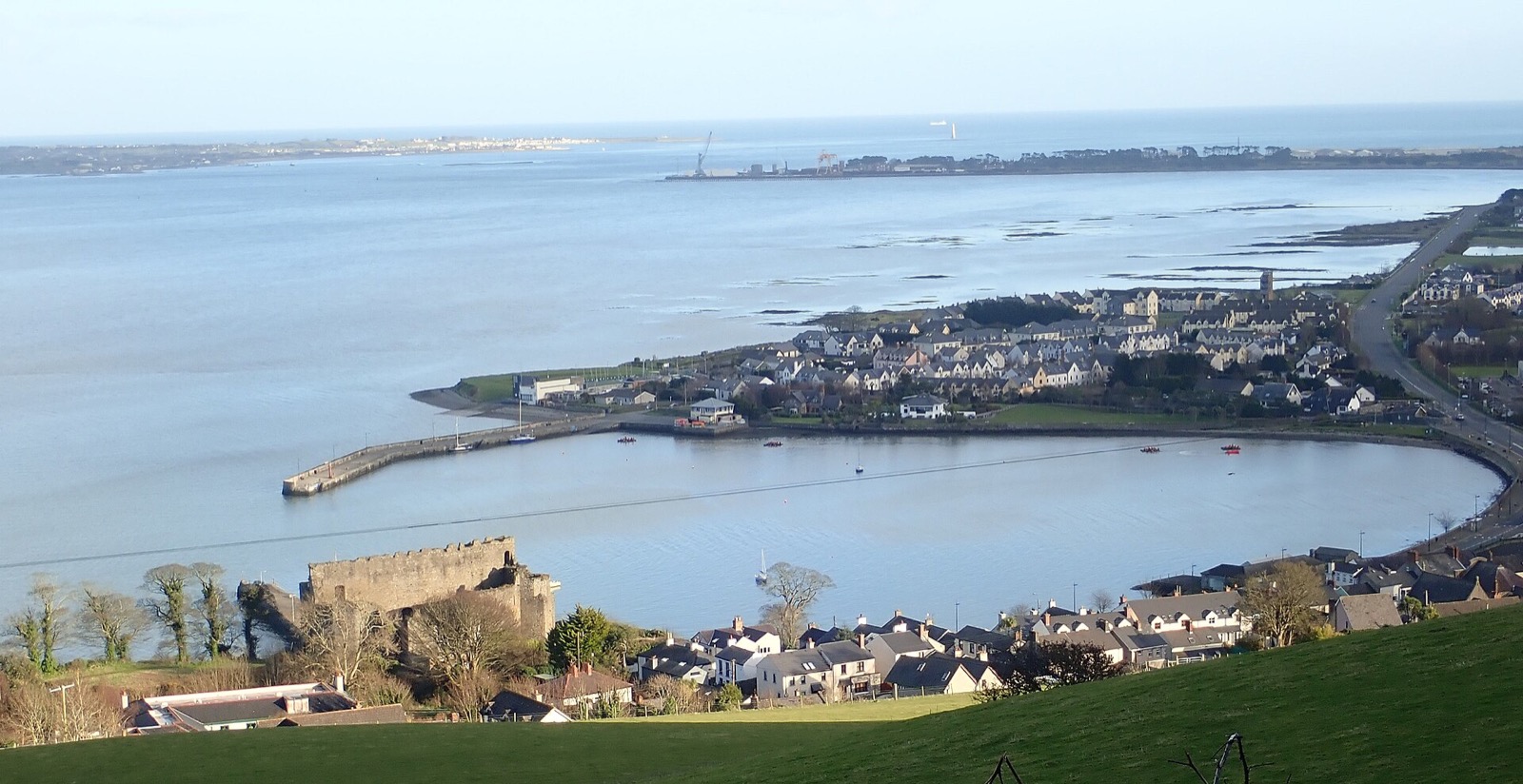
Carlingford is the main village of the Cooley Peninsula in north County Louth, on the southern shore of Carlingford Lough with Slieve Foy rising steeply behind it. The Mourne Mountains fill the view across the water in Northern Ireland, and the border is only about 11 kilometres away by road. The Vikings named the inlet; the Normans built the castle; and the village still keeps its medieval street plan of narrow lanes.
That medieval layout survived for an unglamorous reason. Carlingford was a prosperous trading port in the 14th to 16th centuries, then war, the Cromwellian conquest and the departure of the herring shoals left it in a "state of ruin" by 1744, and no heavy industry ever came along to knock the old buildings down. So you can walk in a few minutes from King John's Castle on the harbour, through the Tholsel gate, past the merchants' tower houses of the Mint and Taaffe's Castle, to the ruined Dominican friary at the south end of town.
Carlingford has drawn visitors since the railway opened the area to tourism in the 1870s, and today it is about 90 kilometres from Dublin, close enough for a long day out. It was once famous for green-finned oysters, and oysters and crab are still the local speciality; the Carlingford Oyster Festival is usually held in August. Walkers come for the hills: the Táin Way loops around the Cooley Peninsula, and Slieve Foy rises directly behind the village.
Dundalk is about 27 kilometres away by road, and in summer a passenger ferry runs from nearby Greenore across the mouth of the lough.