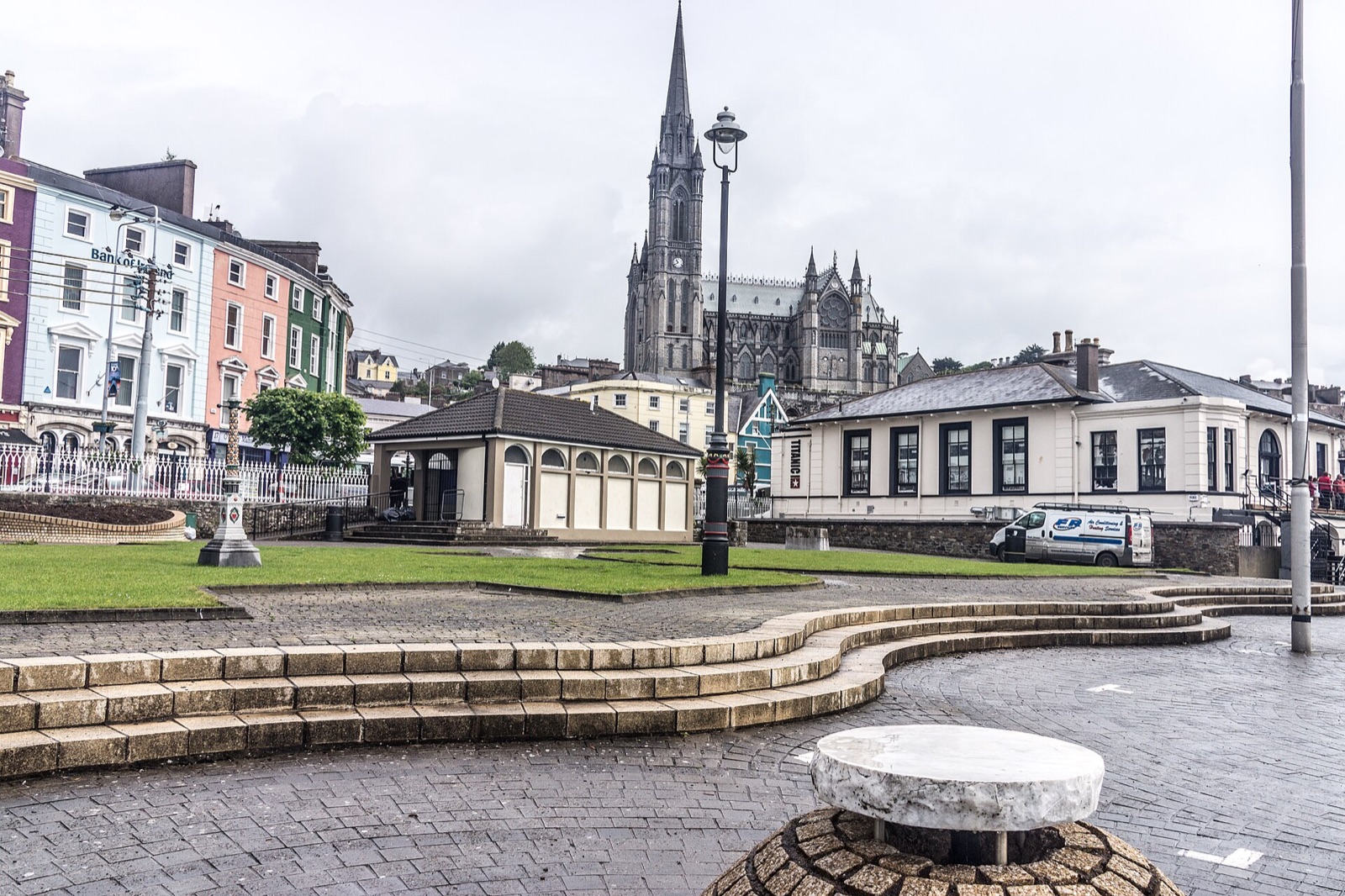
Cobh (say "cove") is a harbour town on the south side of Great Island in Cork Harbour, about 25 minutes from Cork by train. Rows of brightly painted houses climb the hill from the waterfront to St Colman's Cathedral, whose 91-metre spire is the tallest of any church in Ireland. Cruise ships berth right in the town centre at the country's only dedicated cruise terminal, and when one is in they tower over everything.
Few small towns carry this much history. The Royal Navy port here was the Cove of Cork, renamed Queenstown after Queen Victoria's visit in 1849 and Cobh in 1920. About 2.5 million of the 6 million Irish people who emigrated to North America between 1848 and 1950 left from these quays. On 11 April 1912 the Titanic made its final call here, anchored out in the harbour: 123 passengers came out by tender and only 44 of them survived. Three years later the survivors and the dead of the Lusitania, torpedoed off the Old Head of Kinsale, were brought ashore here, and more than a hundred victims lie in the Old Church Cemetery north of town.
The town tells these stories well. The Cobh Heritage Centre fills the old railway station building on Deepwater Quay, and the Titanic Experience walks you through the White Star Line's old departure hall. Out in the harbour, Spike Island and its star fort make the best half-day trip, a ten-minute boat ride from Kennedy Pier. Back on land, the steep streets reward wandering, and the Deck of Cards terrace below the cathedral is the town's postcard view.
Cobh is an easy day trip from Cork, with trains every 30 to 60 minutes from Kent station, but it's pleasant enough to linger in. The pubs are clustered around Casement Square, several with live traditional music. Fota Wildlife Park is a couple of stops back up the line, and drivers coming from the west side of the harbour can take the five-minute car ferry from Passage West to Carrigaloe.