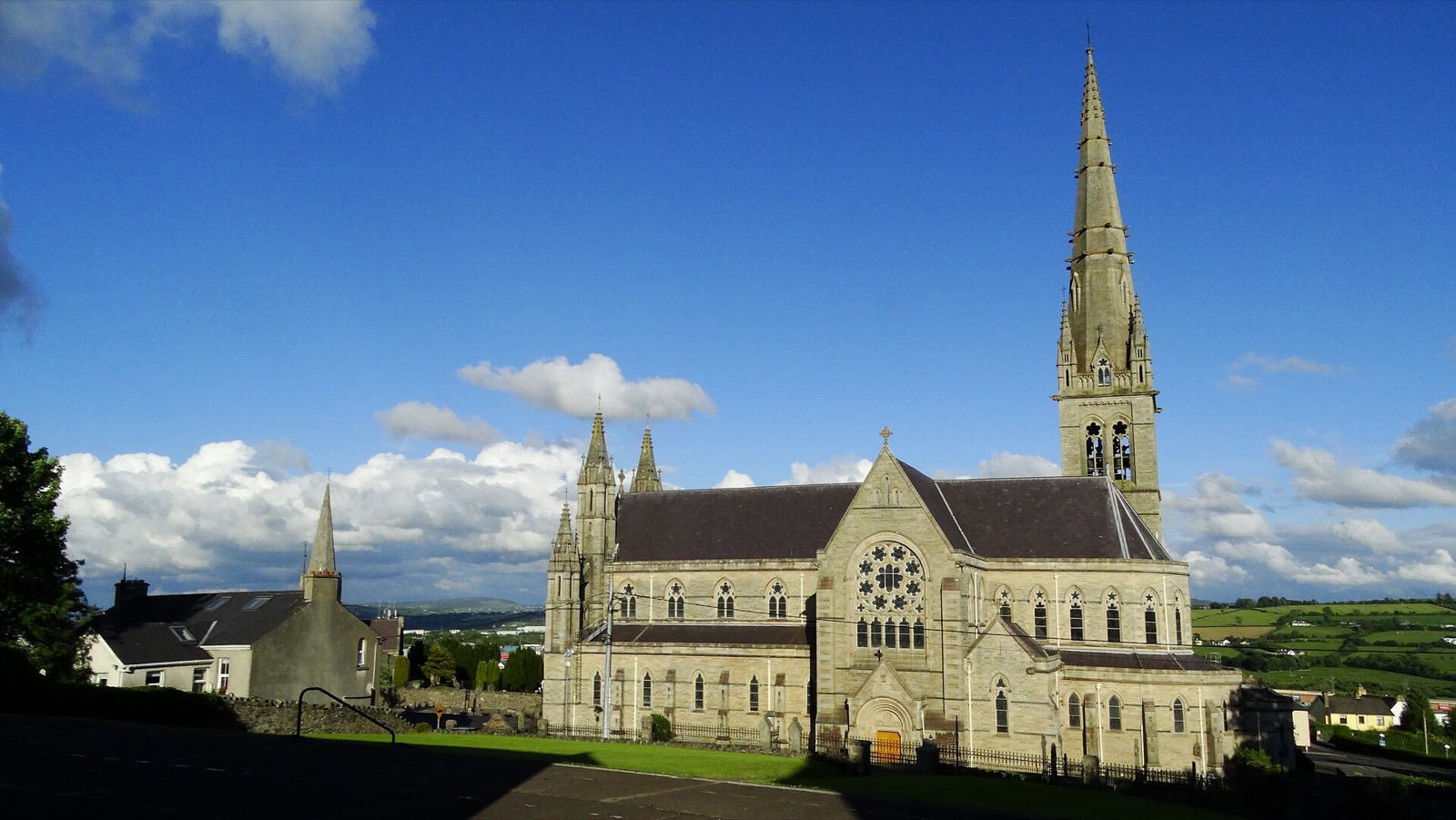
Letterkenny is the largest town in County Donegal, set on a hillside above the River Swilly where it widens into Lough Swilly. It began as a Plantation market town in the early 17th century and is now the commercial hub of the north-west, with a university campus, retail parks and a lot of traffic. It is not a beautiful town, and nobody will tell you otherwise, but it is lively, practical, and the place where Donegal's roads and buses meet.
The town's nickname is the Cathedral Town, and the spire of St Eunan's Cathedral, 73 metres high, is visible from all around. Down the hill, the Donegal County Museum occupies part of the old workhouse and is a good free introduction to the county. Theobald Wolfe Tone, leader of the 1798 rebellion, was arrested in Letterkenny after the French fleet carrying him was captured in Lough Swilly. The Earagail Arts Festival makes the town its hub for two weeks each July.
Letterkenny's real value is as a base. Glenveagh National Park, with its castle, lake and red deer, lies beyond Gartan, north-west of town. On the way you can stop at Glebe House and Gallery, the painter Derek Hill's home full of Picassos and William Morris textiles, or the working waterwheel at Newmills. Dunfanaghy and Horn Head are about 30 kilometres north-west, and Inishowen and Derry are an easy drive north-east.
Letterkenny is the hub for buses around the county, including the routes out along the north coast to Dunfanaghy and the Tory Island ferry. Since the 1998 Good Friday Agreement the border with Northern Ireland has been open, so you can come straight over from Derry without checks.