Lindisfarne, or Holy Island, is joined to the mainland by a causeway that the North Sea covers twice a day. In AD 635 Saint Aidan came from Iona to found a monastery here, and it became one of the great centres of early Christian England: Saint Cuthbert was its bishop, and the Lindisfarne Gospels were made here around 700. The Vikings' raid on the monastery in 793 is usually taken as the start of the Viking Age in Britain.
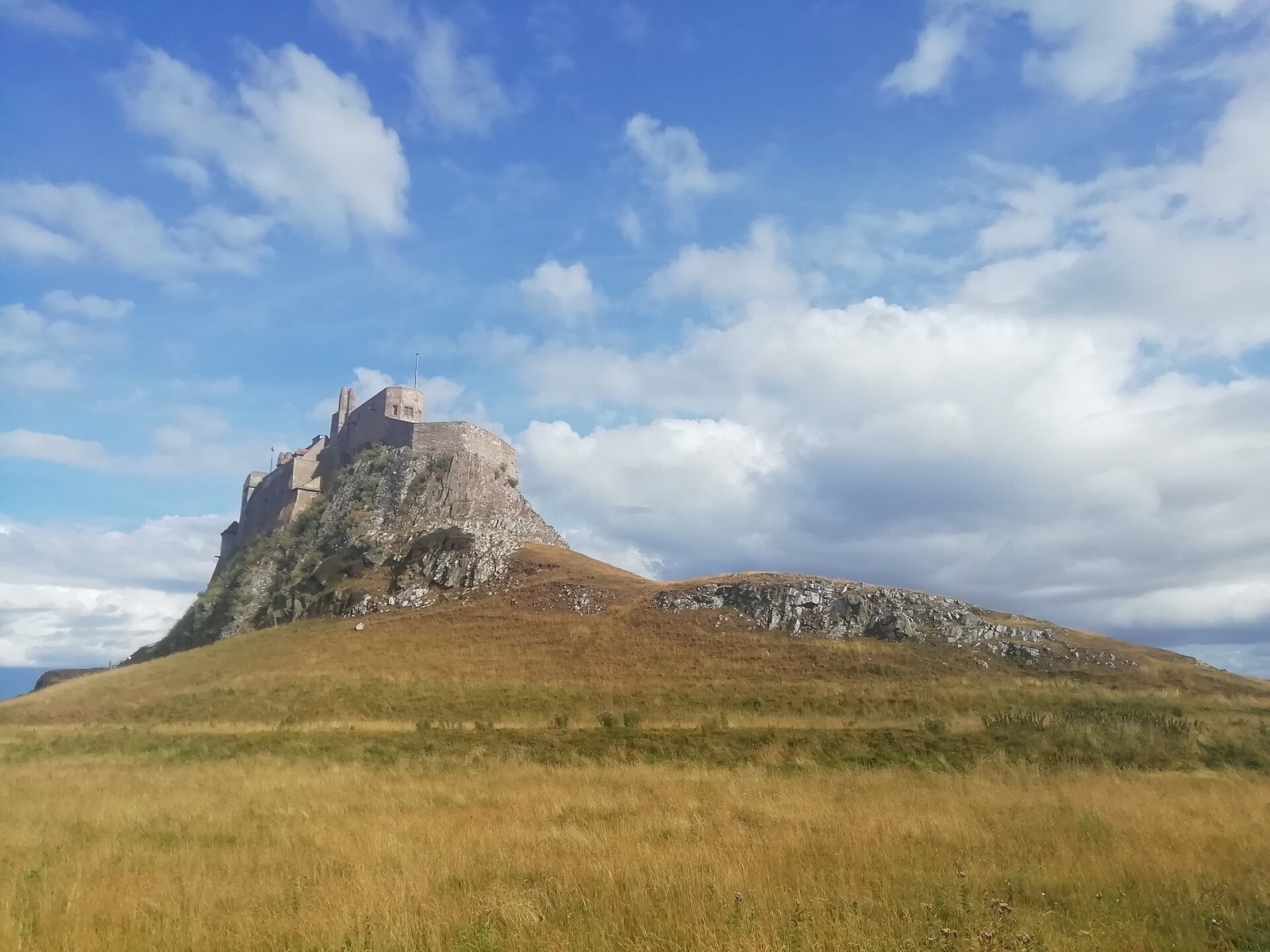
The village is small, with a few pubs and cafés, St Mary's church and the red sandstone ruins of the later priory. A mile east, Lindisfarne Castle sits on its volcanic crag above the harbour, with upturned herring boats used as sheds below it. The rest of the island is dunes, salt marsh and a nature reserve full of wading birds and wintering geese.
Check the tide tables before you cross. They are posted at both ends of the causeway and published by Northumberland County Council, and every year people who ignore them have to be rescued from the refuge box halfway across. The day-trippers leave as the tide comes in, and the island is at its best once the causeway has closed. The Pilgrims' Way, marked by poles across the sands, is the old walking route; only do it with a tide table and local advice.