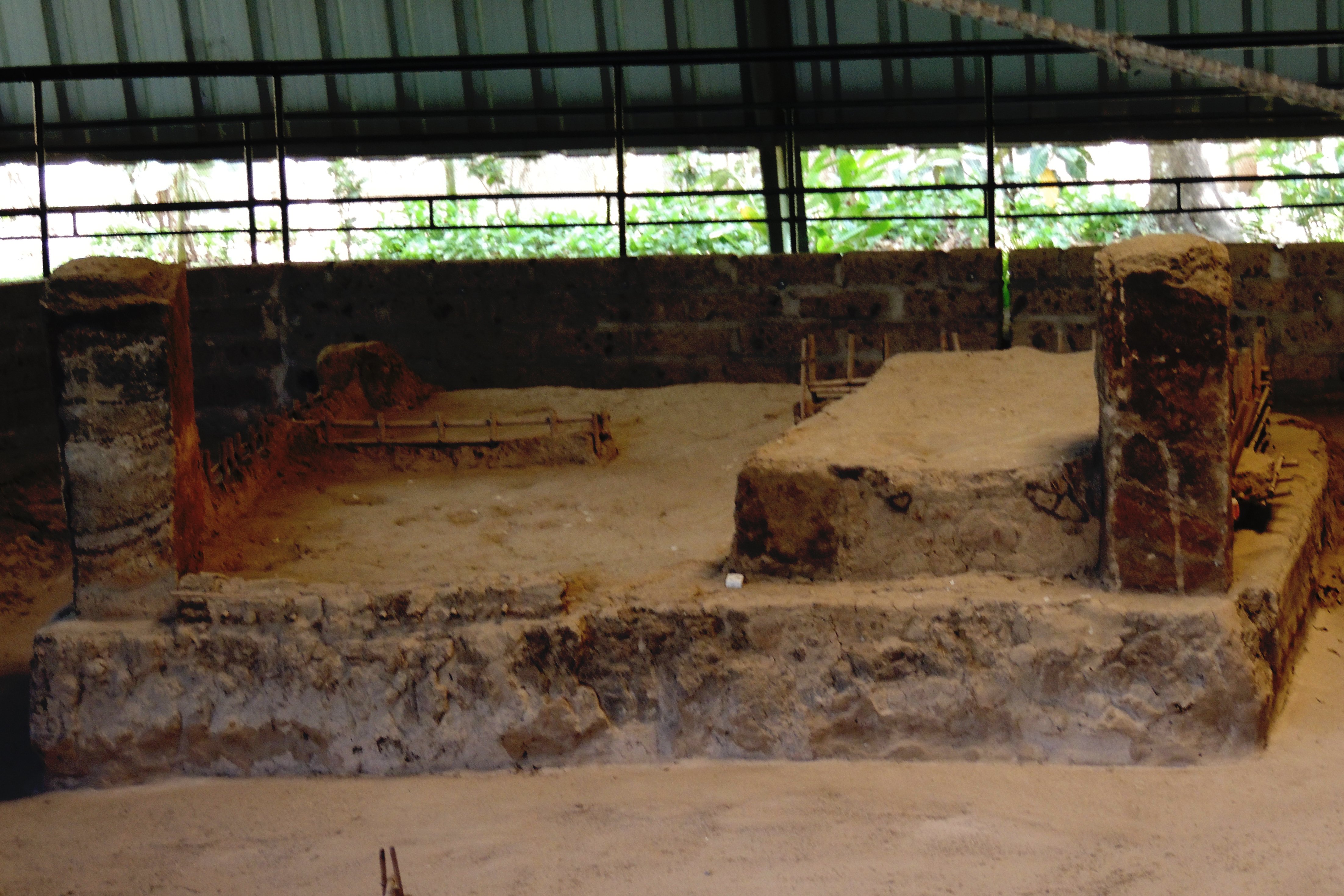
Every other Maya site is temples and palaces: the buildings of kings, which is what survives when everything made of earth and thatch has rotted away. Joya de Cerén is the opposite, and that is why it matters. A farming village of a few hundred people was buried under fourteen metres of ash when the Loma Caldera vent erupted around 600 AD, and the ash sealed it — the adobe walls, the thatch impressions, the storerooms, the sleeping mats, the kitchen garden still planted in rows.
The inhabitants got out. No bodies have been found, and the evacuation seems to have happened in the evening, quickly enough to leave food in the pots and a duck tied up in one house. What was left is the only picture anyone has of how ordinary Maya people actually lived, which is why UNESCO listed it in 1993.
It is a modest visit in scale — a dozen structures under shelters, plus a small museum — and it takes an hour. Read the labels; without them the mounds are just mounds, and with them they are somebody's kitchen. It sits half an hour west of San Salvador near the town of San Juan Opico, and combines easily with Tazumal and the San Andrés site.