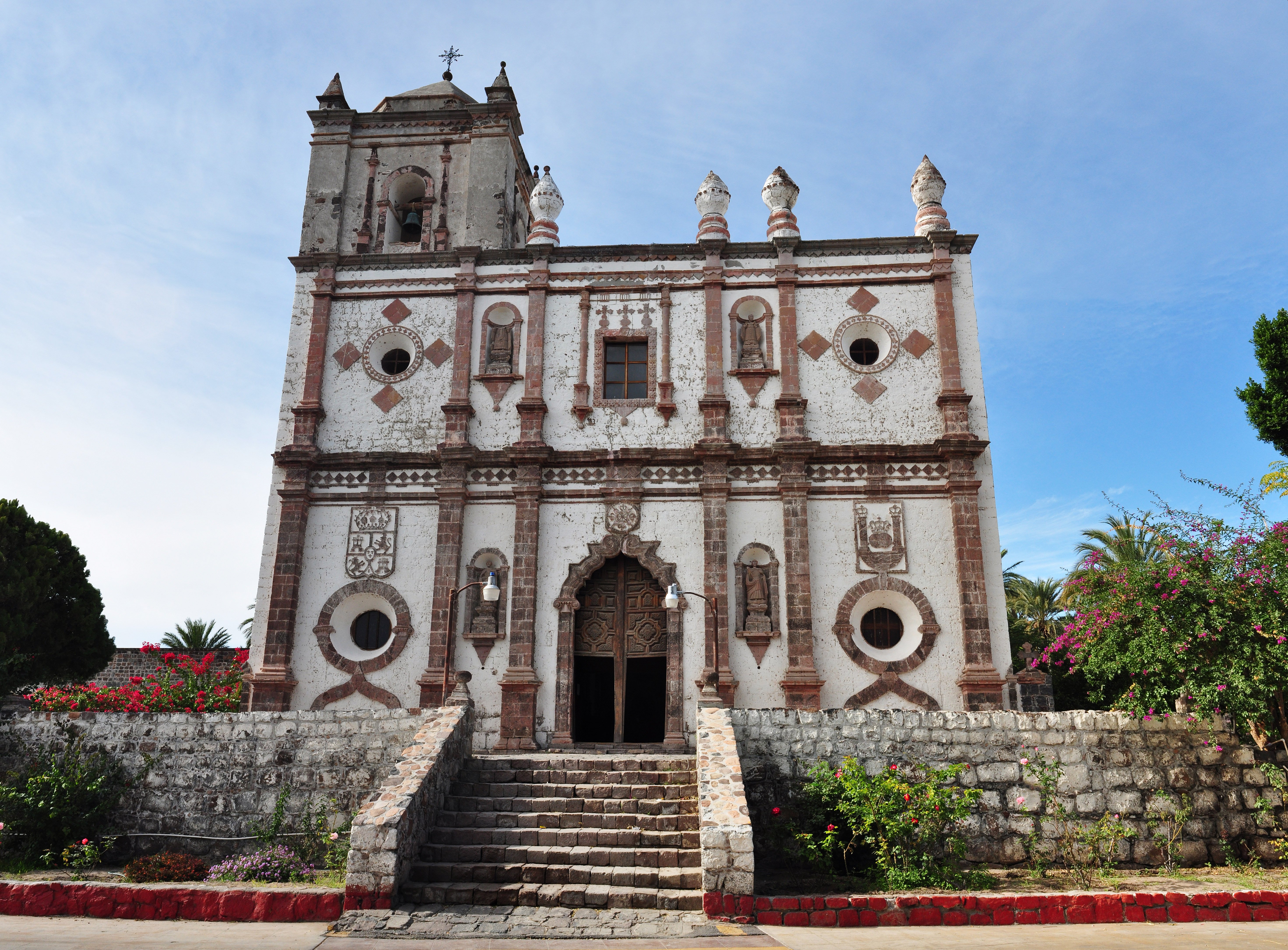
A date-palm oasis in the middle of the Baja desert, with a Jesuit mission church and grey whales calving in the lagoon.
San Ignacio appears out of nothing. The road from Guerrero Negro runs through several hundred kilometres of volcanic desert and then drops into a basin of several thousand date palms planted by Jesuit missionaries in the eighteenth century, with a lagoon in the middle of it.
The mission church, finished in 1786, has walls more than a metre thick of lava block and is the best preserved on the peninsula. The village square in front of it is shaded by laurels and is, by some distance, the most pleasant place to sit in central Baja.
Laguna San Ignacio, an hour south-west on a rough road, is the reason most people come. Grey whales migrate here from the Bering Sea to calve between January and April, and this lagoon — the least developed of the three — is where the mothers routinely bring their calves alongside the small boats to be touched. It is a UNESCO site and the number of boats is strictly limited.
Inland, the Sierra de San Francisco holds the finest rock art in Mexico: human and animal figures painted on cave walls up to ten metres across, some of them several thousand years old. Reaching them means a guided trip by mule, arranged in the village, of between one and several days.
Guide
Activities
San Ignacio is a date-palm oasis with a Jesuit mission church in the middle of the Vizcaíno desert, and it is the gateway to two things that are worth crossing a continent for.
Laguna San Ignacio, sixty kilometres southwest down a dirt road, is where grey whales calve between roughly mid-January and mid-April after swimming down from the Bering Sea. It is the lagoon where the whales approach the boats — mothers pushing calves up to be touched, a behaviour first recorded here in 1972 and now passed between generations of whales. Boat numbers are capped by the biosphere reserve and all trips go through the permitted camps.
The rock art of the Sierra de San Francisco, north of town, is the other. Hundreds of painted shelters, some with human figures three metres tall, made by people the Cochimí could only say were giants, and dated to as much as seven thousand years ago. It is a UNESCO World Heritage site, access is by mule with a registered INAH guide and a permit, and the better sites are a two-day ride in. Arrangements are made in San Ignacio or in the village of San Francisco de la Sierra.