Calakmul was the Kaan kingdom — the Snake dynasty — and for most of the Classic period it was Tikal's equal and enemy. The two of them fought a proxy war across the Maya lowlands for two centuries, each backing the other's rivals, and Calakmul won more of it than Tikal did. Then, in the eighth century, it lost, and the forest came back.
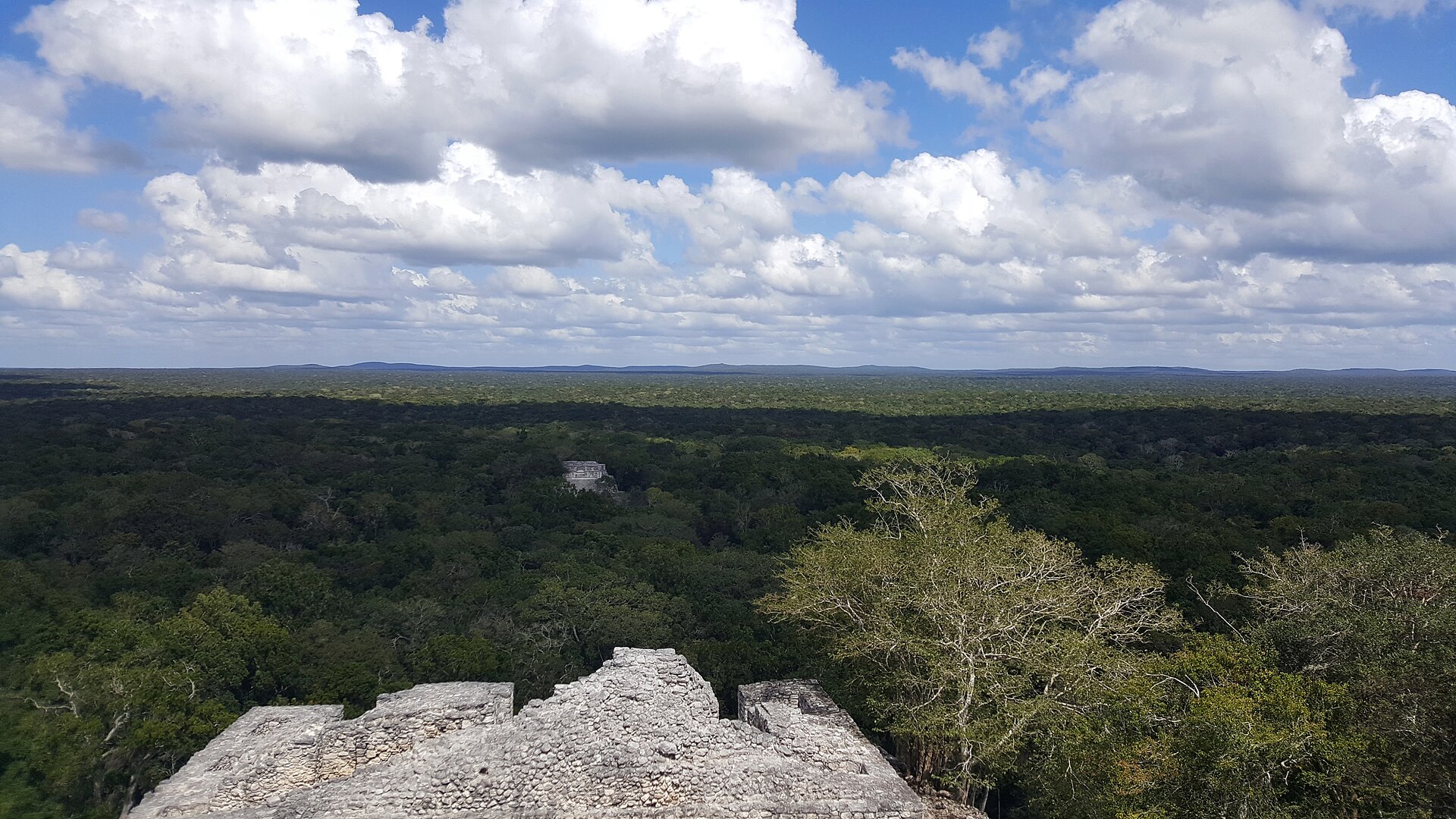
What is there now is over six thousand recorded structures in a city that may have held fifty thousand people, almost all of it unexcavated, scattered through the second-largest tropical forest in the Americas after the Amazon. Structure II is among the tallest Maya pyramids ever built, and you may still climb it. From the top there is jungle to every horizon with the tops of other pyramids breaking through it, and nothing else.
Visitor numbers are a fraction of Chichén Itzá's. On a weekday morning there may be twenty people in the whole site.
The surrounding biosphere reserve covers 723,000 hectares and is listed by UNESCO as a mixed site — for the city and for the forest together. It holds jaguar, puma, ocelot, tapir, spider and howler monkeys, and some 350 bird species. Howlers are audible from the ruins and the road in crosses forest where big cats are genuinely present.
Getting there takes commitment. The site is sixty kilometres down a single paved spur off Highway 186, and the nearest town, Xpujil, is an hour and a half from the entrance. Day trips from Campeche city or Chetumal are five or six hours of driving. Staying at Xpujil or at one of the lodges on the road in buys you the early morning, which is when the animals are out and the heat is not.
The nearby Río Bec sites — Becán, Chicanná, Xpujil, Balamkú — are a different architectural style and almost completely empty.