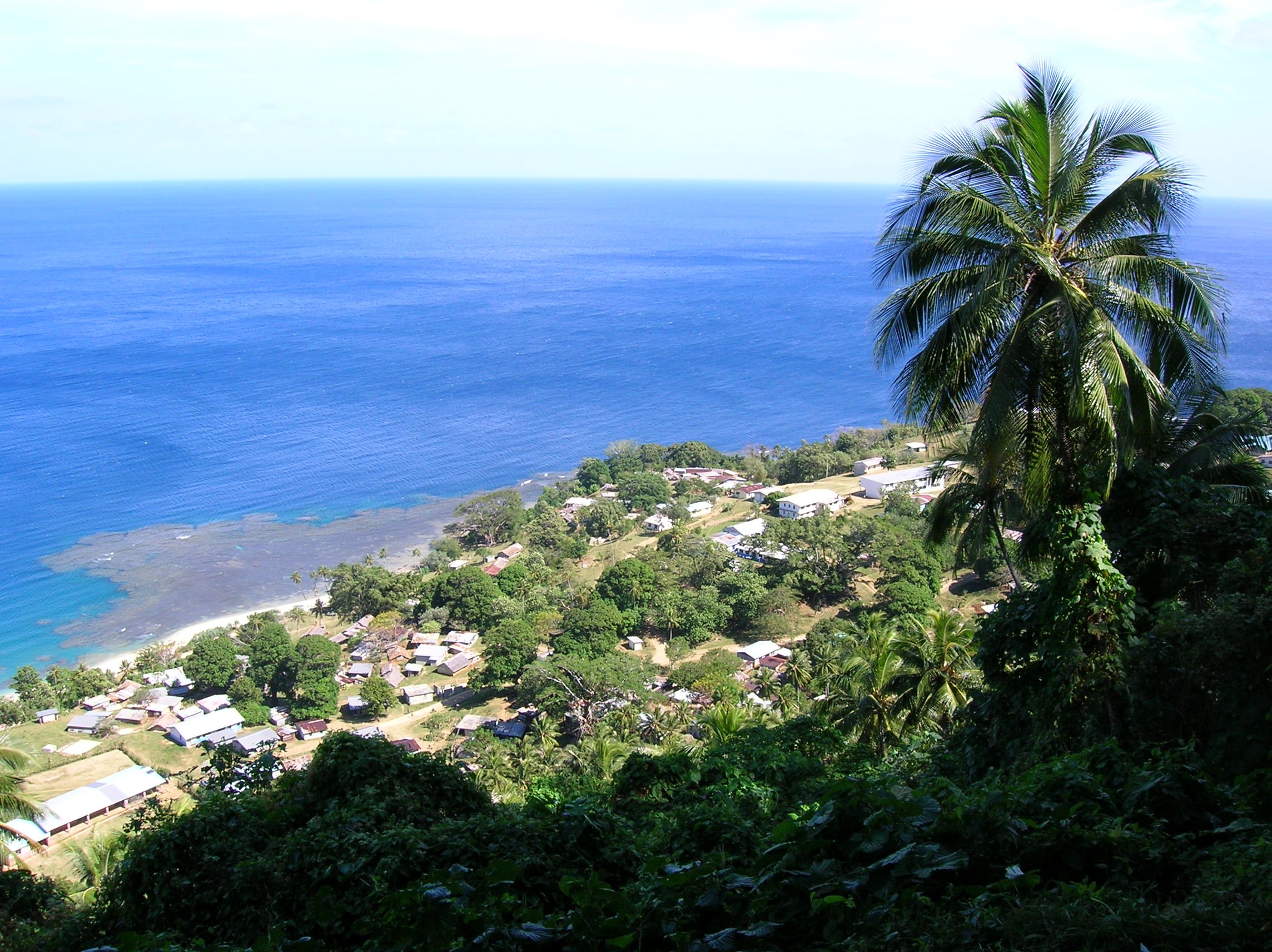
Pentecost is a long, mountainous island in the eastern arc of Vanuatu, about 250 kilometres north of Port Vila. It is famous for one thing above all: the Naghol, the land dive performed each year in the southern villages between April and June. Men build vertiginous wooden towers up to thirty metres high, tie vines to their ankles, and throw themselves off head-first to brush the cleared earth below. It is the ritual that gave the modern world bungee jumping — A. J. Hackett saw it on Pentecost in the 1980s and commercialised the idea — and it remains one of the most extraordinary living ceremonies in the Pacific.
The island runs about sixty kilometres north to south, with a high central ridge that splits it into two distinct halves. The west coast, facing the inner islands, has the main settlements and the Catholic mission at Melsisi; the east coast is wilder, with traditional kastom villages and a steep, jungle-covered drop into the sea. The southern villages of Bunlap, Panngi, and the cluster around Baravet are the heartland of kastom culture and the home of the land dive.
Pentecost is one of the more linguistically dense places on earth even by Vanuatu's standards: a single small island carries five distinct indigenous languages, none of them mutually intelligible, divided roughly by north, central, and south. Most people also speak Bislama, the national pidgin, and a number speak French or English thanks to the country's split colonial schooling system.
The practical reality is that Pentecost is a real outer-island Vanuatu experience: rough roads, basic bungalow accommodation in the villages, no formal restaurants outside the missions, and a deeply traditional way of life that has not been packaged for tourism. Visits are arranged through tour operators in Port Vila or directly with village hosts, and the land-dive season — Saturdays in April, May, and early June — is the only time when scheduled flights and organised groups fill up. Outside the season, the island is yours.