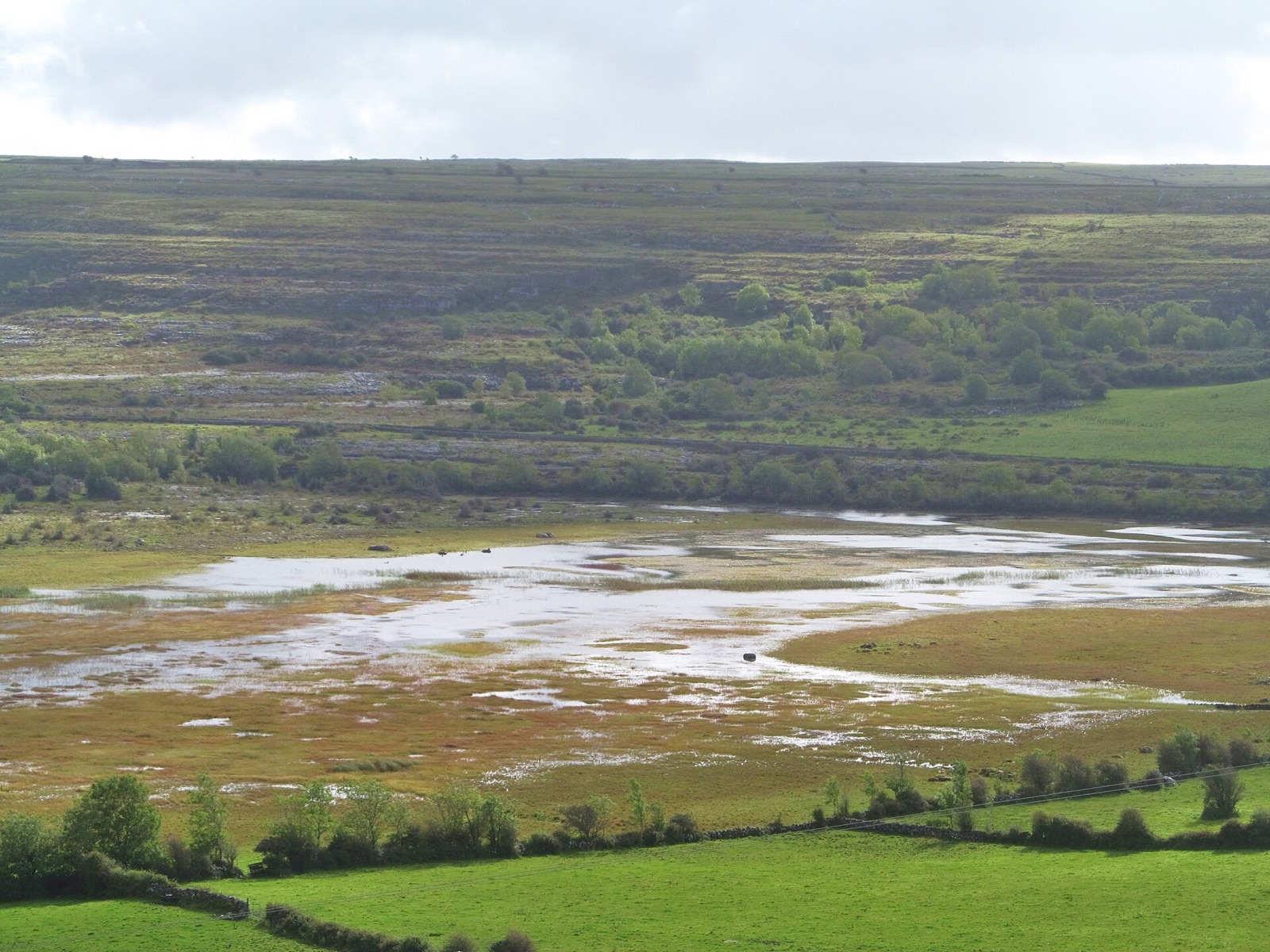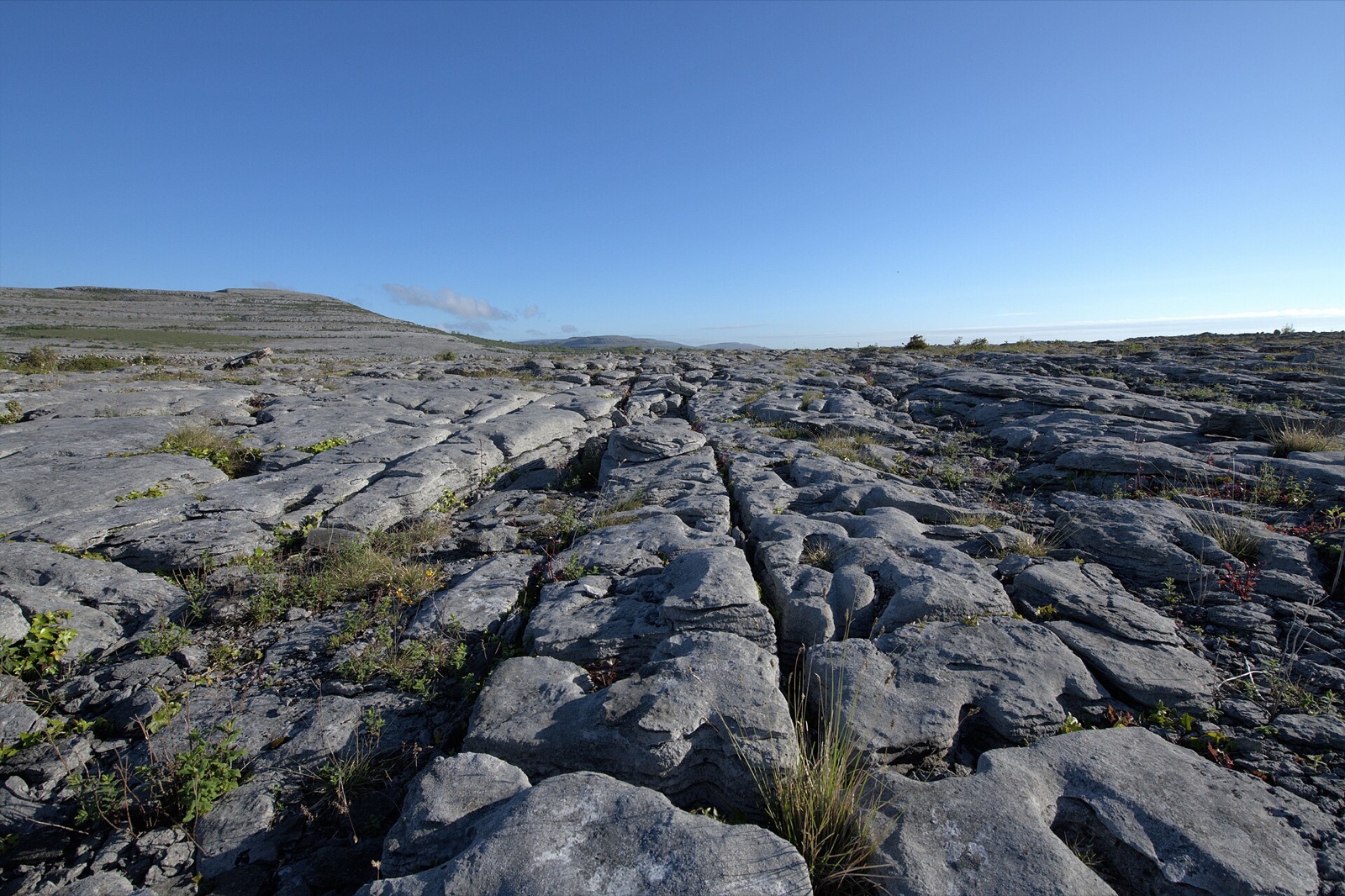
The Burren is a great grey sheet of limestone covering some 530 square kilometres of north County Clare, roughly within the circle of Lisdoonvarna, Corofin, Gort and Kinvara. The rock was laid down in a tropical sea around 325 million years ago, buried under shale, and then scraped bare by glaciers. What's left is a landscape like nowhere else in Ireland: terraced grey hills, and pavements of flat slabs (clints) split by deep cracks (grikes). Cromwell's commander Edmund Ludlow famously complained that there was "not enough water to drown a man, wood enough to hang one, nor earth enough to bury him".
Look closer and the bare rock is full of life. More than 70 percent of Ireland's species of flowers grow here, including 23 of its 28 orchids, and Arctic-alpine plants grow side by side with Mediterranean ones in the sheltered grikes. The spring gentian, a small, intensely blue alpine flower, is the region's symbol. Late spring and early summer are the time to see them. The farming is just as odd: cattle are moved up to the limestone hills in winter rather than summer, an old practice that allows grazing all year round.
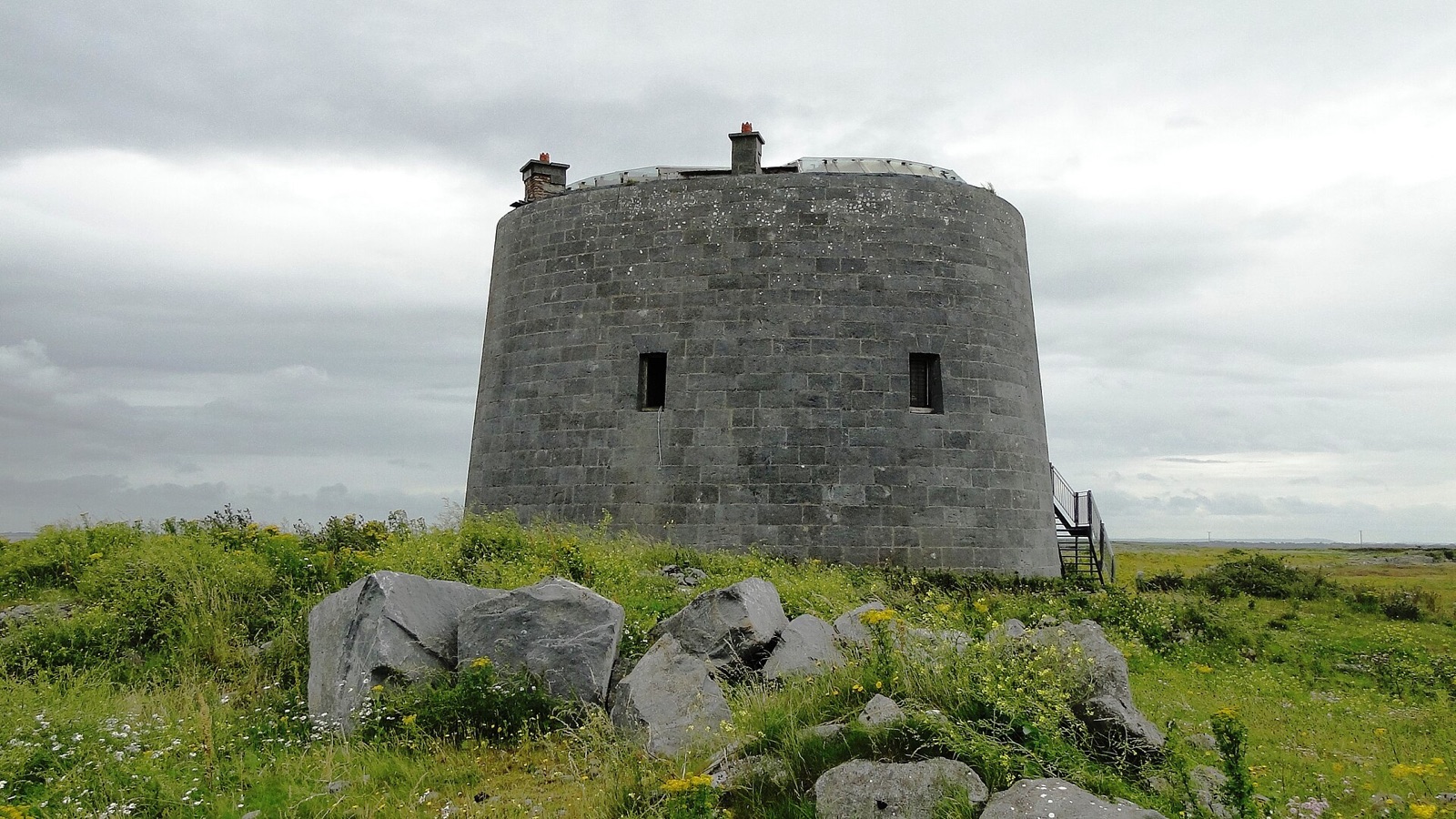
People have lived on this rock for at least 6,000 years. The Neolithic portal tomb at Poulnabrone is the famous one, but the hills are dotted with wedge tombs and almost 500 stone ring forts, Caherconnell among them. Corcomroe Abbey is a beautifully carved Cistercian ruin in a green valley near the coast. Underground, rain has carved more than 50 kilometres of mapped caves, and Aillwee Cave and Doolin Cave are open to visitors. The south-east corner around Mullaghmore is protected as Burren National Park, and the whole area, with the Cliffs of Moher, forms a UNESCO Global Geopark.
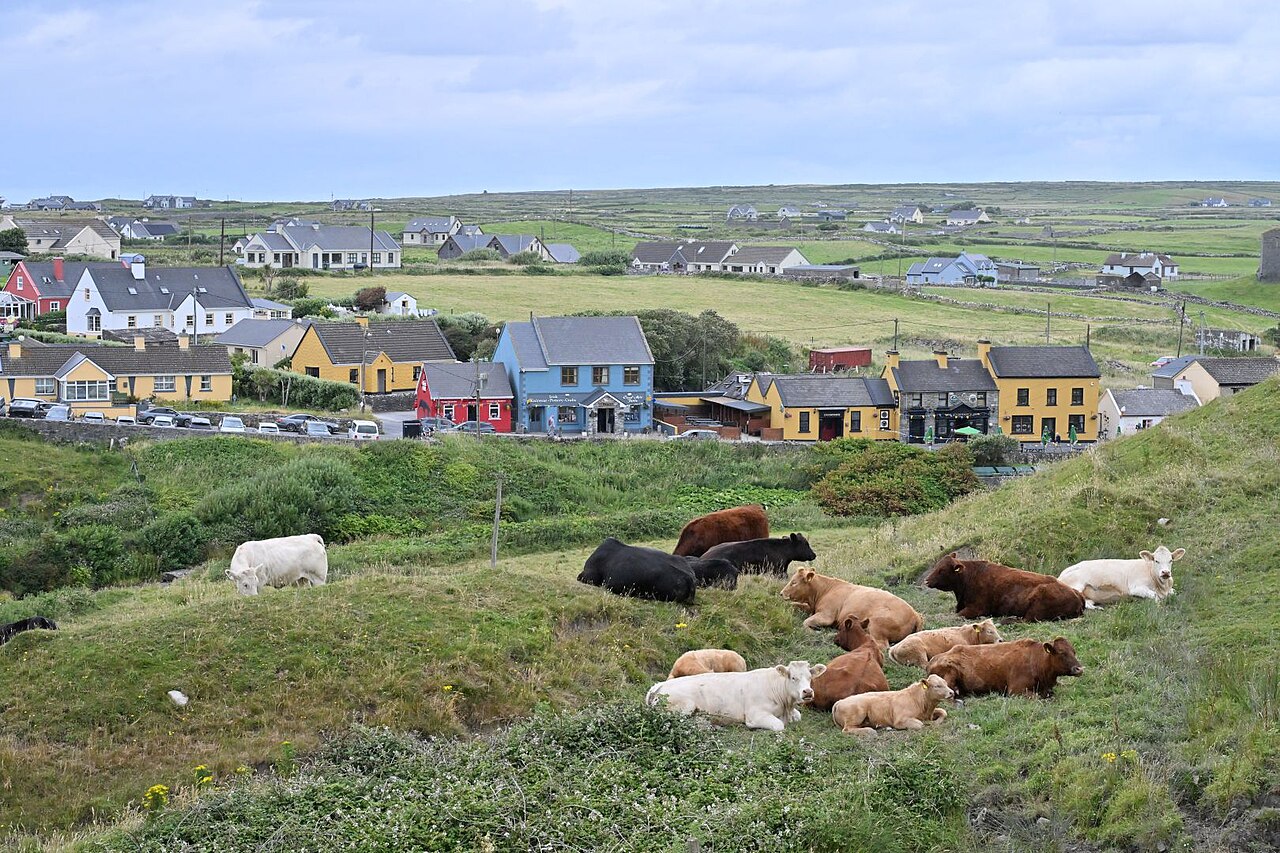
There are no towns here, only villages. Doolin on the Atlantic side has the music and the most places to stay, Ballyvaughan on Galway Bay is closest to the northern sights, tiny Kilfenora is the most central, and Lahinch and Ennis are within easy reach to the south. Bus 350 runs along the coast between Galway and Ennis, but inland you need a car or a bike, and the best way to see the Burren is on foot.