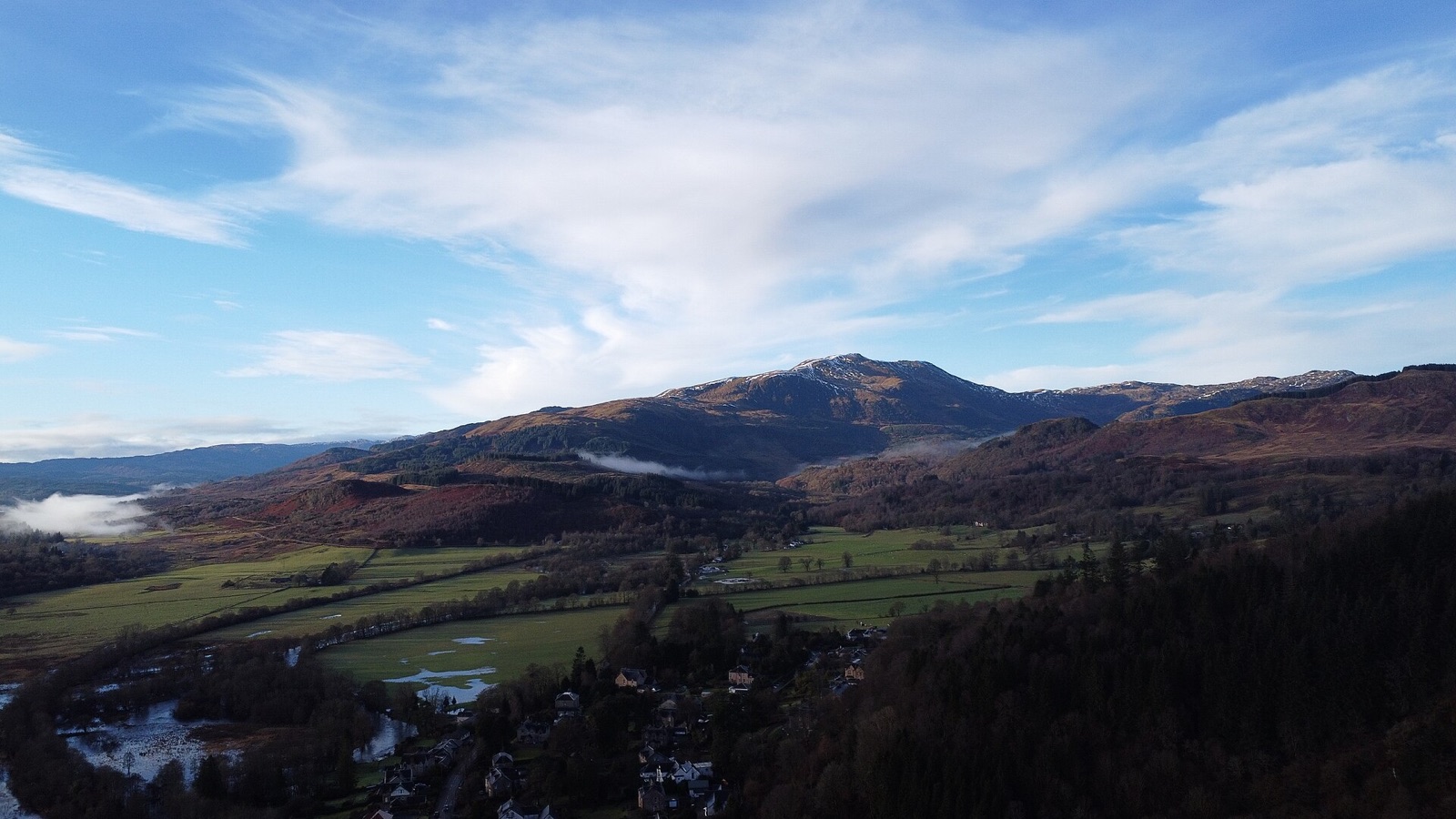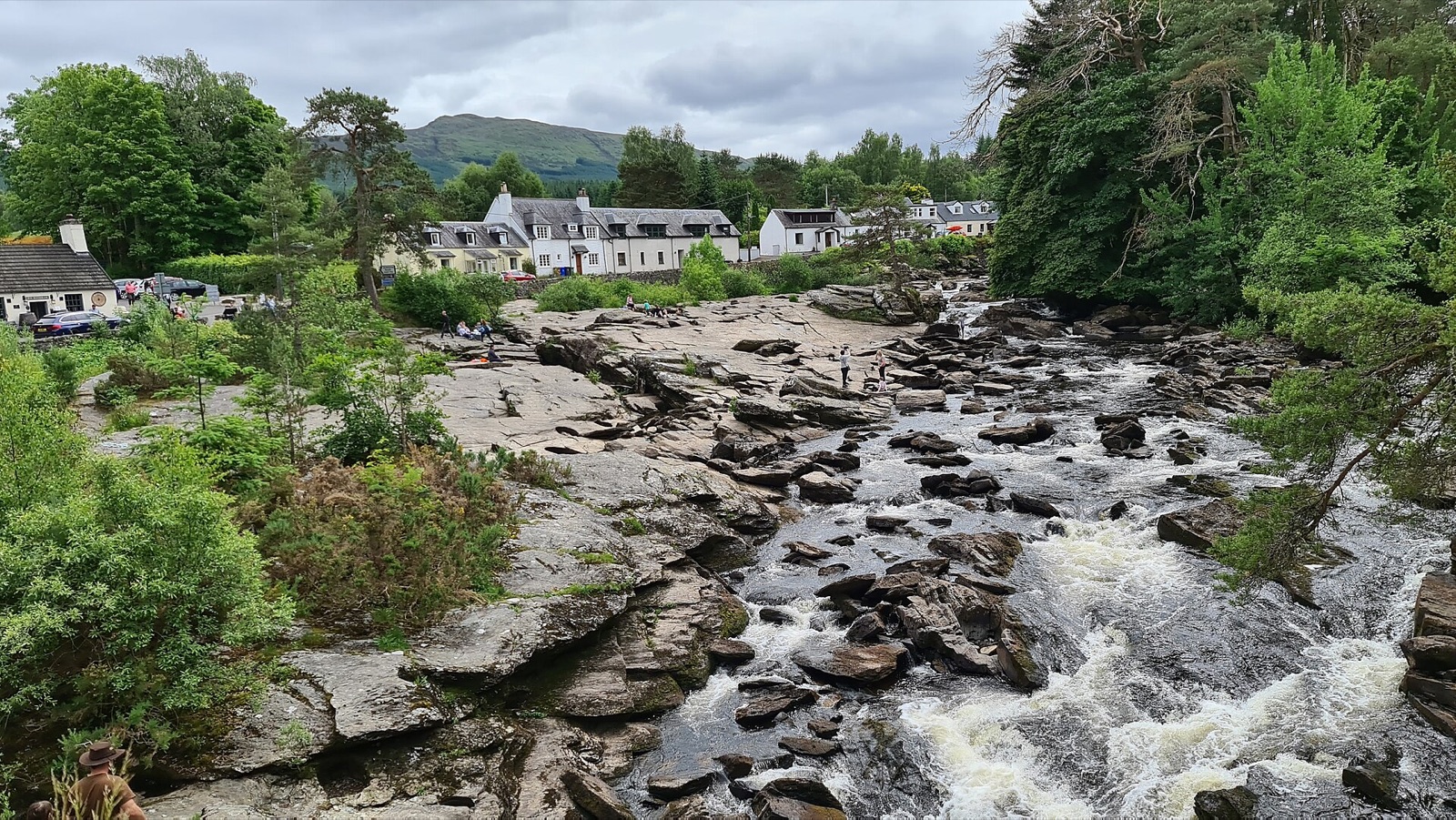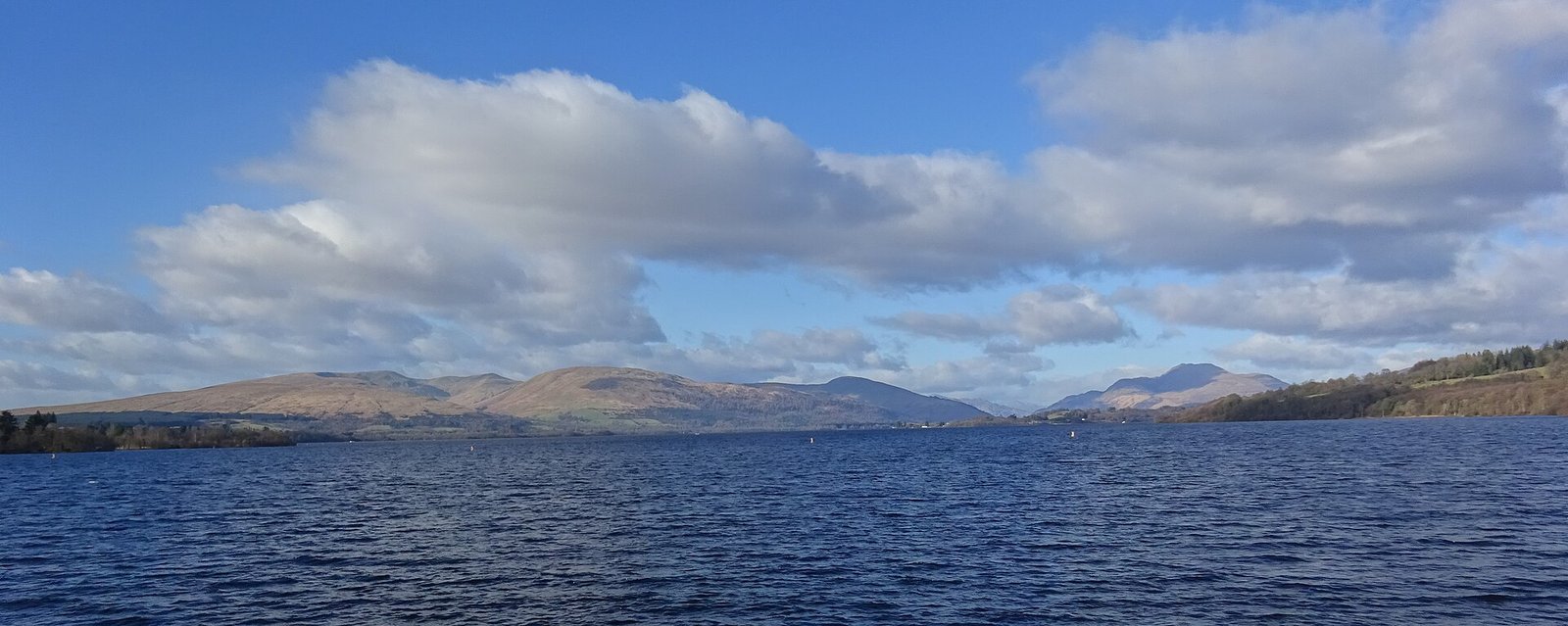
Loch Lomond and the Trossachs is where the Highlands start — not gradually, but along a single geological line. The Highland Boundary Fault runs straight across Loch Lomond, through the islands of Inchmurrin and Inchcailloch and over the ridge of Conic Hill: south of it, green farmland; north of it, mountains. It became Scotland's first national park in 2002, covering 1,865 km² and 21 Munros, and it gets close to three million visits a year — most of them day trips from Glasgow, just to the south.
Loch Lomond is the largest lake in Great Britain by area, 36 km long, broad and island-studded in the south and narrow and deep (up to 190 m) between the mountains in the north. Balloch at the southern tip is the gateway, with the train from Glasgow, loch cruises and Balloch Castle Country Park. Halfway up the west shore, Luss is a conservation village of 19th-century cottages and the ancestral home of the Colquhouns; it was the set of the soap Take the High Road, and its 120 residents now host more than 750,000 visitors a year. On the quieter east shore, Balmaha and Rowardennan are the starting points for Conic Hill and Ben Lomond, and the West Highland Way runs the whole length of the loch.
The Trossachs, east of Ben Lomond, are a smaller, more intimate landscape of wooded glens and lochs — the country of Rob Roy MacGregor and Walter Scott's The Lady of the Lake, and visitors have been coming for the scenery ever since. The Victorian steamer SS Sir Walter Scott still sails on Loch Katrine, which supplies Glasgow's drinking water, and Ben A'an above it is the best small hill in Scotland for the effort. Callander and Aberfoyle are the gateway towns; the Great Trossachs Path links Callander with Inversnaid on Loch Lomond.
The honest caveat: this is the most accessible wild country in Scotland, and on a sunny summer weekend the A82 along the west shore, Luss and the Conic Hill path are all very busy. Go midweek, go early, or head for the east shore and the Trossachs lochs, and the place still delivers.