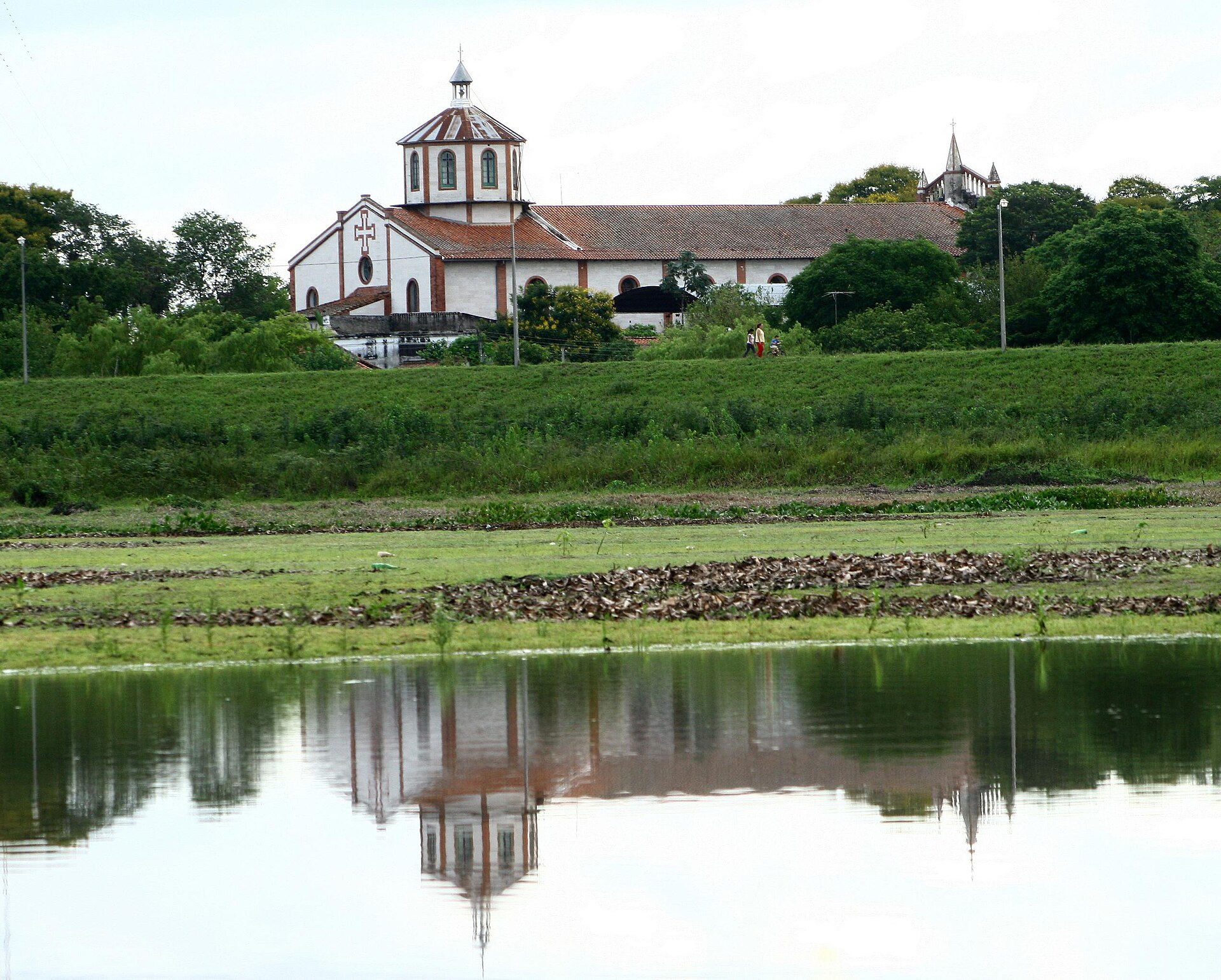
Pilar sits where the Arroyo Ñeembucú meets the Río Paraguay, 230 km south of Asunción and directly across the water from Argentine Formosa. It is the capital of Ñeembucú, the flattest, wettest and emptiest department in eastern Paraguay, and it has the unhurried feel of a place that was important in 1860 and has been quietly getting on with things since.
Founded in 1779 as Villa del Ñeembucú, it keeps the only colonial cabildo still standing in Paraguay, built in 1784. The Basílica Menor de Nuestra Señora del Pilar on the plaza was raised to basilica rank in 1978. The old Manufactura de Pilar textile mill, opened in 1929, is still working and still makes the cotton sheets and towels that everyone in the country calls simply "Pilar."
The country around is the draw for anyone with patience: the Esteros del Ñeembucú, a huge system of marsh, oxbow lakes and flooded grassland running north towards Humaitá, thick with capybara, caiman and waterbirds and almost entirely unvisited. Dorado and surubí fishing on the Paraguay is a serious local business, and February carnival in Pilar is the biggest in the south after Encarnación's.
A launch crosses to Argentina; a road bridge to Colonia Cano has been announced repeatedly and, at time of writing, not built. Buses from Asunción take five to six hours on Ruta 4.