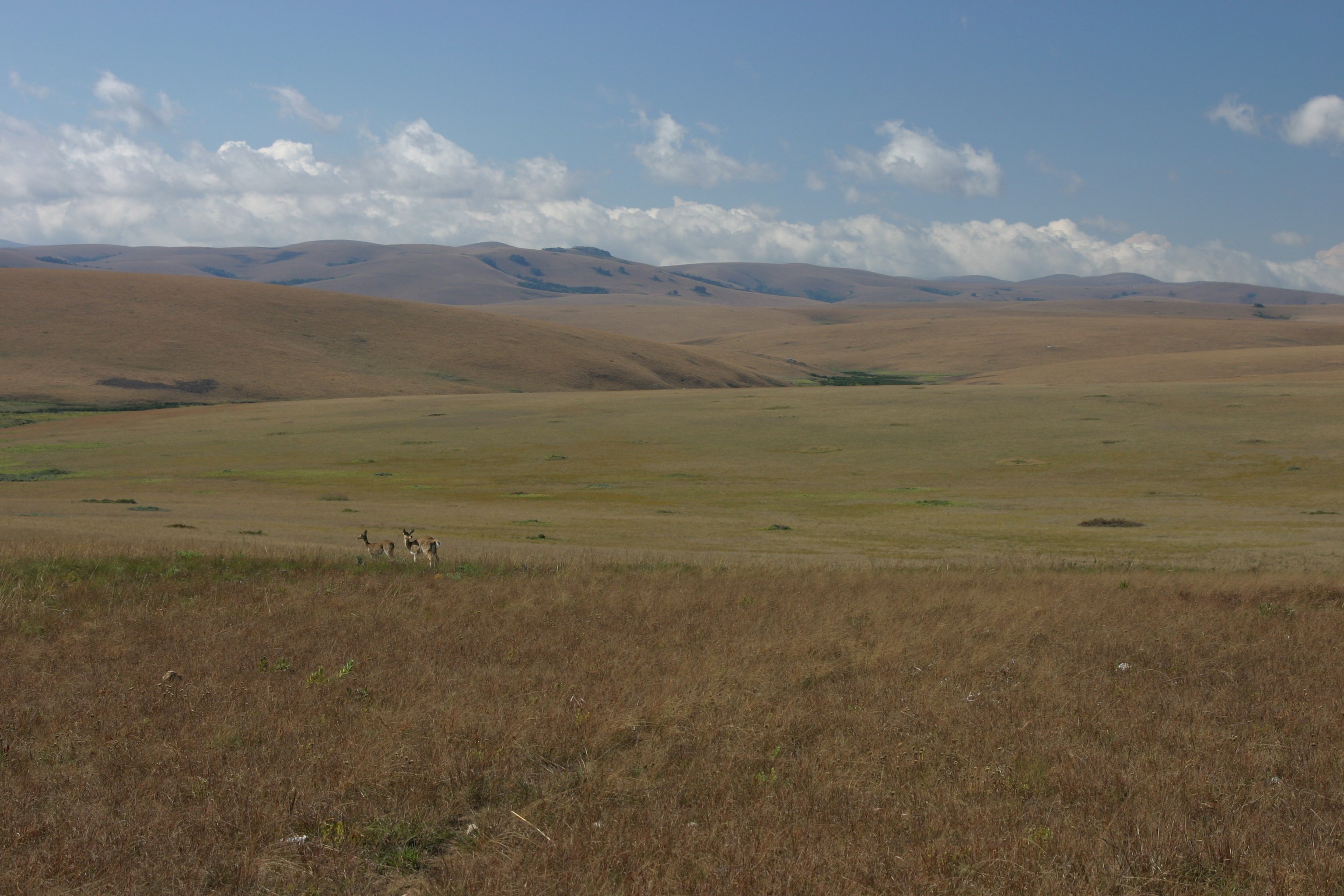
Nyika is Malawi's largest national park, a 3,200 square-kilometre plateau rising to 2,600 metres in the country's far north. It is unlike anywhere else in the region — rolling montane grassland that runs to the horizon in every direction, broken by pine plantations, valleys of evergreen forest, and clear streams full of trout. The high altitude keeps the climate cool, the air thin and sharp, and the visitor numbers low. Most travellers come for the views and the walking; the wildlife is a bonus rather than the main event.
The grassland is grazed by enormous herds of antelope — roan, eland, reedbuck, and the largest population of zebra in Malawi. Leopard are present but rarely seen; hyena and jackal you will hear at night from the camps. The park is also famous for its orchids — over 200 species, with a flowering peak in November and December — and for its butterflies. The bird list runs past 400 species, including high-altitude specialists like Denham's bustard and the wattled crane.
The centre of activity is Chelinda Camp, in the middle of the plateau, with cabins, a campsite, and the park's only fuel supply. From here a network of dirt tracks and walking trails leads across the park: to Domwe Pass, to the Juniper Forest where the southernmost African junipers grow, and to Chisanga Falls on the western escarpment. Multi-day horseback safaris from Chelinda are a Nyika speciality and the best way to see the wildlife on its own terms.
Access is rough. The road in from Rumphi climbs steeply and deteriorates badly in the rains (November to April); 4WD is essential at any time of year. There are sporadic flights from Lilongwe to Chelinda's airstrip. Bring layers — the plateau can drop to near freezing at night even in the dry season — and enough fuel and food to be self-sufficient.