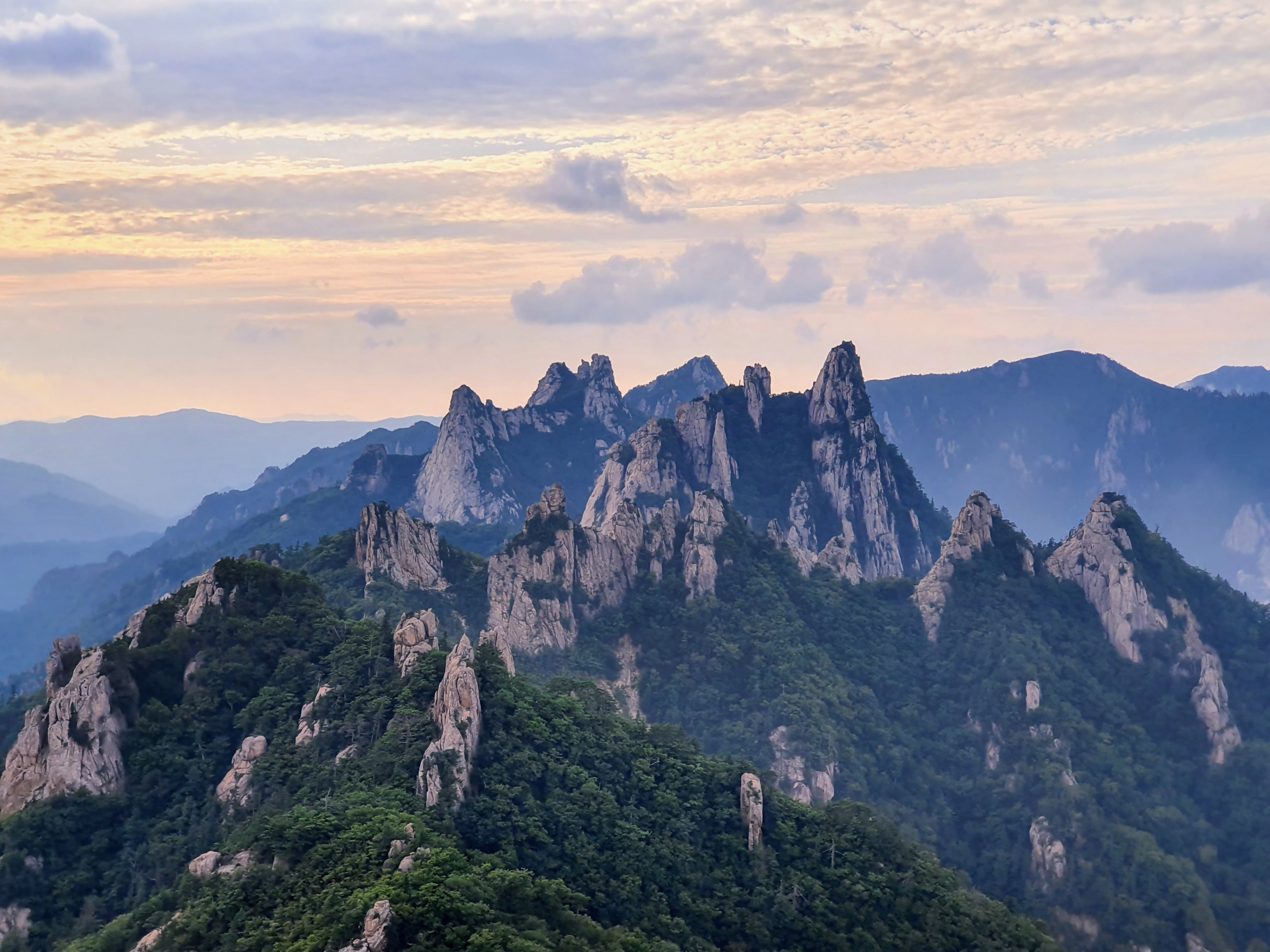
Seoraksan — Mount Sorak — is the highest peak in the Taebaek mountain range and one of the most celebrated natural landscapes in South Korea. The national park surrounding it protects a dramatic terrain of sheer granite spires, deep valleys, waterfalls, and boulder-strewn ridgelines that draws more visitors each year than any other Korean national park. It is at its most spectacular in October, when the autumn foliage turns the granite peaks red and gold — one of the most photographed scenes in the country.
The park divides into inner (Naesorak) and outer (Oesorak) sections. Oesorak, on the east side near the city of Sokcho, is more developed and more visited, with cable cars, clearly marked trails, and Sinheungsa temple at the entrance. Naesorak to the west is wilder, accessible mainly from the county of Inje, with the ancient temple of Baekdamsa deep in the valley as the main landmark.
The rock is what makes Seoraksan exceptional. Ulsanbawi is a six-peaked granite formation that dominates the northern skyline — a two-hour hike from Sinheungsa temple with iron ladders on the final scramble to the summit. Gwongeumseong fortress and the cable car above it offer the easiest access to the high ridges. The waterfalls of Biryong and Towangseong drop dramatically from the granite walls in the Cheonbuldong valley.
The base city is Sokcho on the east coast, a pleasant seafood town with beaches and a tidal lagoon. The park entrance at Seorakdong is a short bus ride from Sokcho. Trails within the park are well-maintained and signed; the main routes see serious crowds on weekends and holidays, particularly in autumn. Quieter trails in the Naesorak section reward those who make the journey.